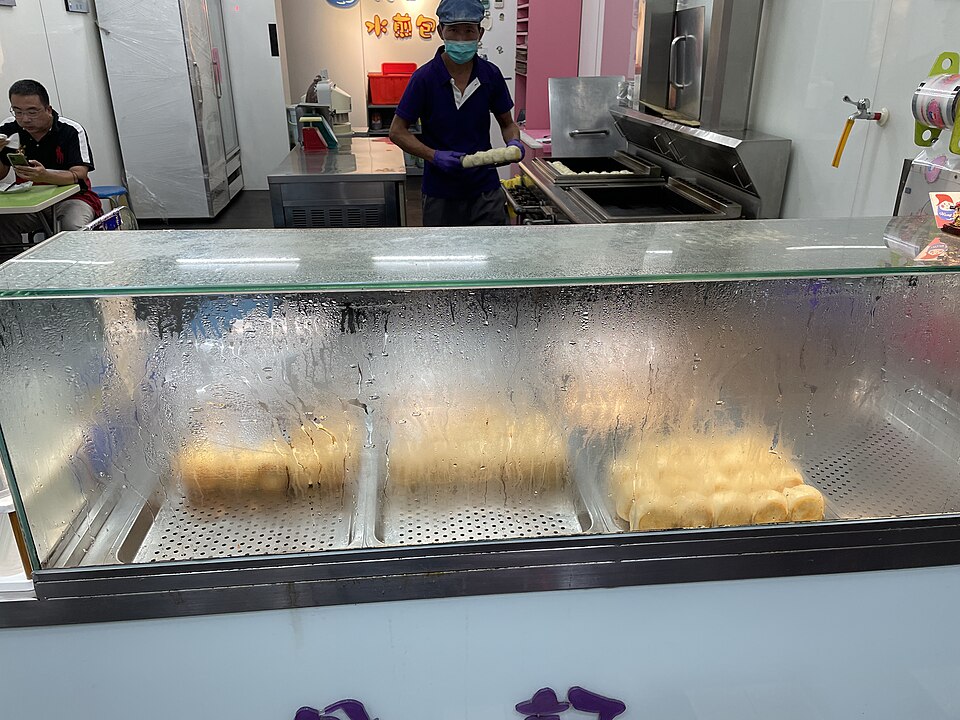
What it is
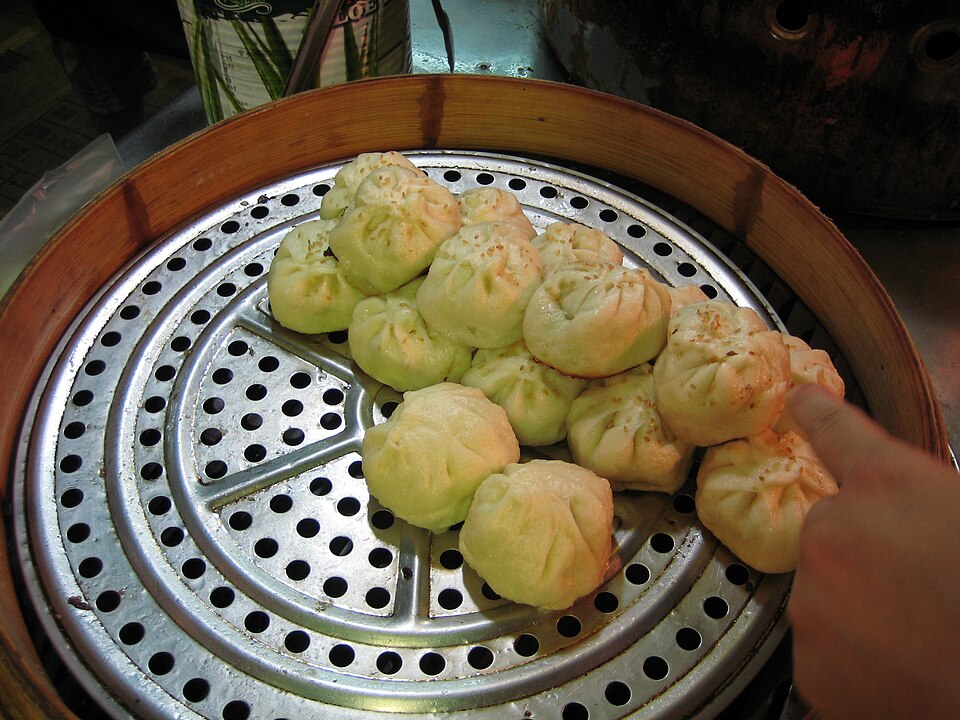
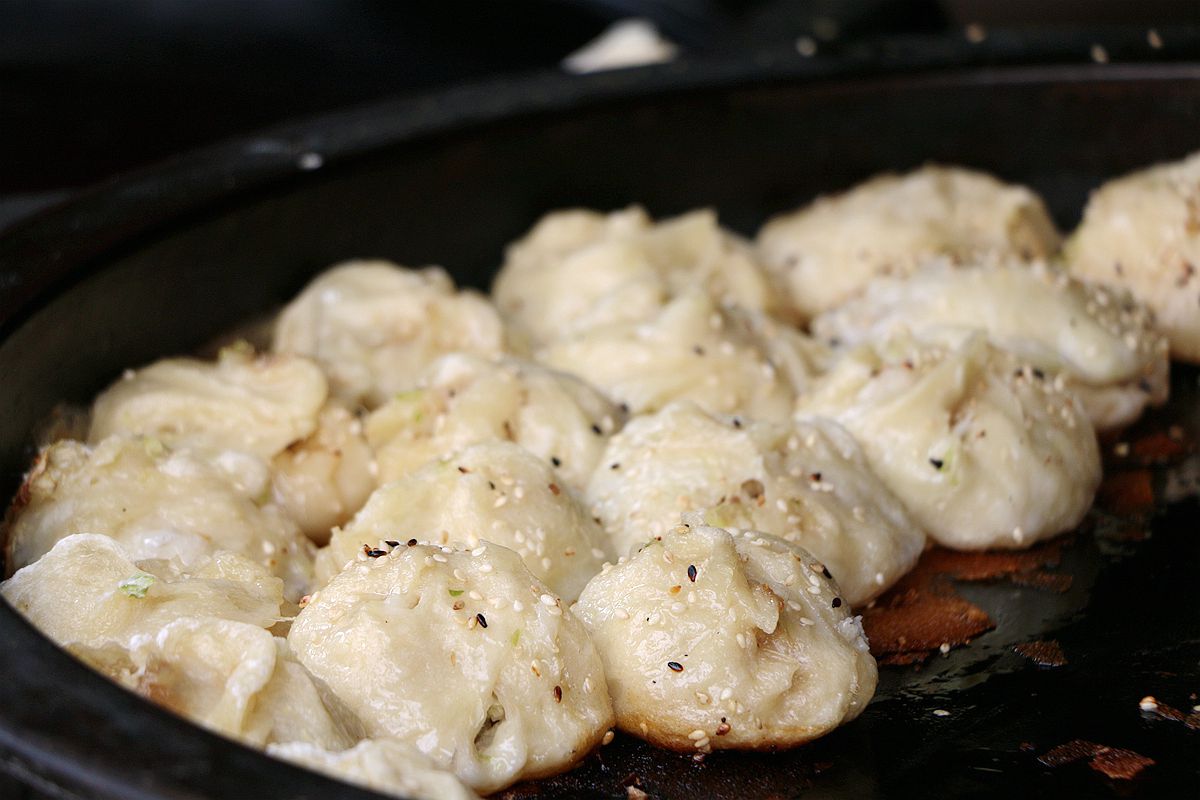
Shui jian bao (水煎包, "water-fried bun") is a leavened wheat bun with a generous filling, cooked in a wide flat pan instead of a steamer. It is bigger than a potsticker. In Taiwan the classic filling is cabbage, often with some minced pork, and some stalls also sell a chive version (韭菜). Black sesame is often scattered on top as the buns come out of the pan.
Where it came from
The bun has no agreed birthplace. One account traces it to Kaifeng, capital of the Song dynasty, and says it spread from there across northern China and the Central Plains. Today it is usually filed under Shandong cuisine, and in eastern Henan and south-west Shandong people simply call it jian bao (煎包). It is also a common snack in Fujian, Guangdong, Hong Kong and Macau. Pork and dried scallop are typical fillings, and Guangdong cooks add shrimp.
It is often confused with Shanghai's shengjian bao (生煎包), which took shape in Suzhou in the early 20th century, but the two are separate buns. Taiwanese versions are filled mainly with cabbage.
How it is made
The dough is leavened, rolled into rounds, filled and pleated. The buns are packed into an oiled flat pan with small gaps between them and the pleats all facing one way. They fry until the bottoms form a crust. Then water is poured in to partway up the buns and the pan is covered, so the dough steams and puffs as the water boils away. A full pan takes a while, so stalls cook in batches.
How to eat it
It is eaten for breakfast or as an afternoon snack, usually bought to take away. Eat it soon after it leaves the pan, as the base softens and the juices seep out as it sits. Many people add chilli sauce, and some stalls serve the chive bun with sweet chilli sauce.
Around Taiwan
- Kaohsiung
- Xia Yi Guo (下一鍋水煎包) in Yancheng has been making buns for more than 40 years. Two pans take turns, each needing at least 20 minutes, so regulars phone ahead rather than wait for the next batch.
- Central
- In Taichung's Nantun District, Dan Dan Pan-Fried Buns (旦旦煎包) fills its cabbage buns with minced pork, ginger and spring onion, and leaves out glass noodles. Its chive buns are meant for sweet chilli sauce.