What it is
Pig blood cake (豬血糕), also sold as rice blood cake (米血糕 or 米血), is glutinous rice bound with pig blood and steamed into a dark, firm block. On the street it comes on a bamboo stick, dipped in sauce and rolled in peanut powder.
Where it came from
The snack came to Taiwan with migrants from Fujian and grew out of farm thrift. Households raised poultry mostly to sell and killed birds for festivals and offerings. Rather than waste the blood, they mixed it with rice, steamed it and ate it with a sauce. The early versions used duck or chicken blood. Duck was costly and chicken blood sets poorly, so pig blood took over. A festival treat became a snack for schoolchildren and then a night-market standard.
The poet and food writer Chiao Tung (焦桐) guesses that the skewered street version began near an old Taipei slaughterhouse, where people collected unwanted pig blood by the bucket. In 2009 members and editors of the travel site VirtualTourist put Taiwan's pig blood cake first on a list of the world's ten most unusual foods.
How it is made
Fresh blood is mixed with glutinous rice, salt and seasonings, then steamed until it sets into a solid slab. The slab is cut into rectangles and kept warm in a wooden box or metal steamer. For the classic stick, a large thin slice goes onto bamboo, is dipped in sauce, rolled in ground peanut and topped with coriander. Versions made with duck blood are firmer and hold up better in cooking.
How to eat it
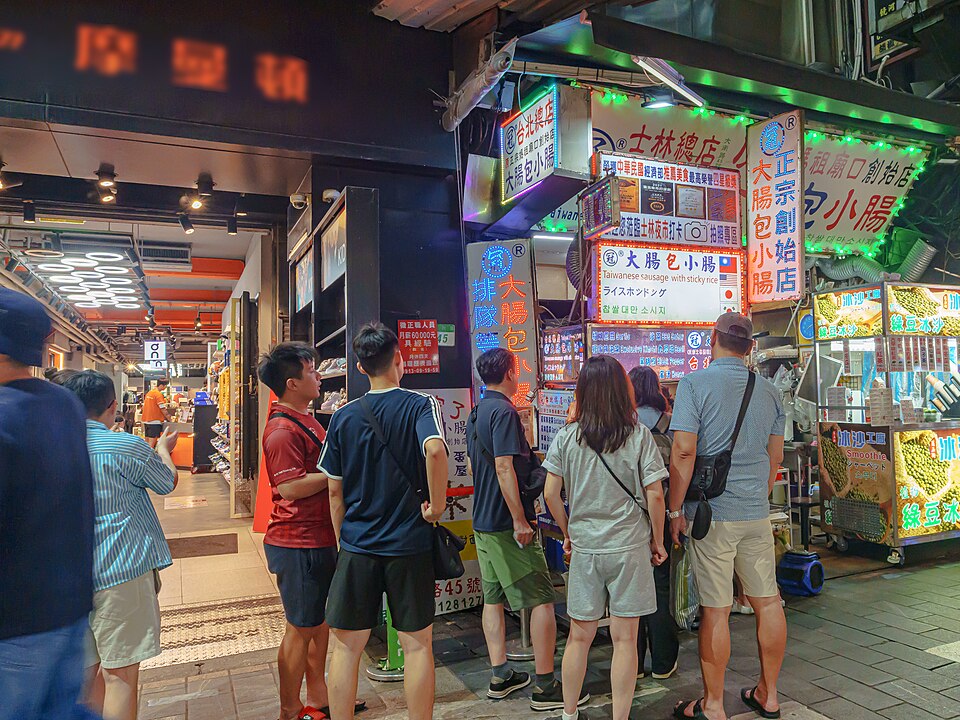
The skewered version is eaten standing at a night market or street cart. The same cake turns up in hot pot, in lu wei (滷味, braised snacks) and deep-fried at popcorn-chicken stalls with basil and spiced salt. It also goes into sesame-oil chicken or ginger duck soup to soak up the broth. In hot pot, add it late, as it sticks and burns if boiled too long.
Around Taiwan
- North
- Northern stalls roll the cake thickly in peanut powder and add a little coriander. Chiao Tung considers Taipei the place where it is most common.
- South
- The southern way is different: the cake comes with sweet chilli sauce, thick soy paste (醬油膏) and shredded ginger rather than a heavy peanut coat.