What it is
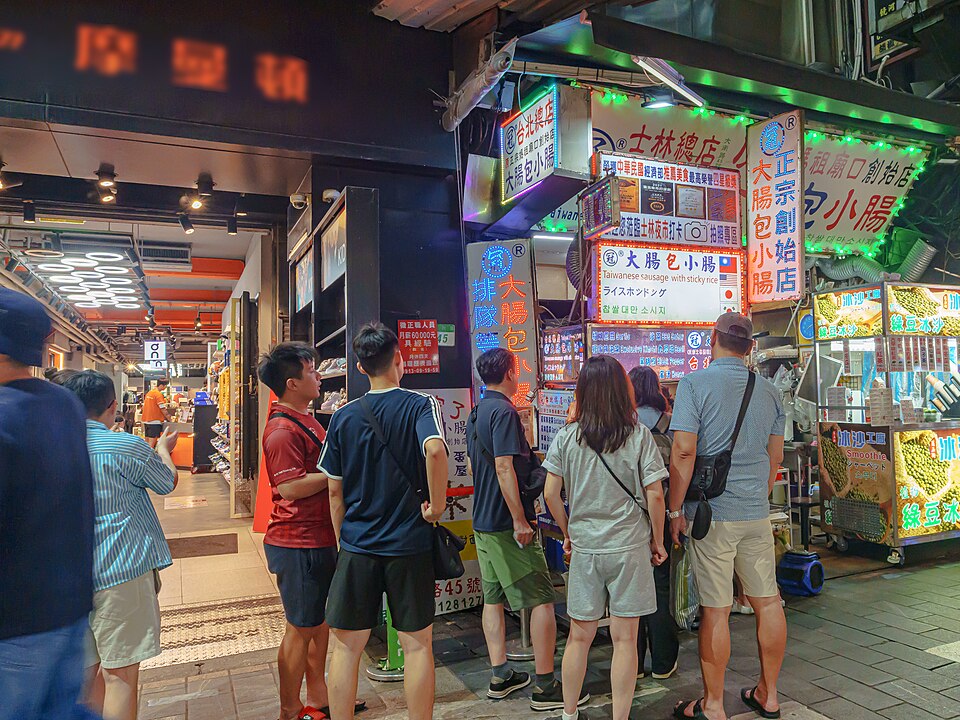
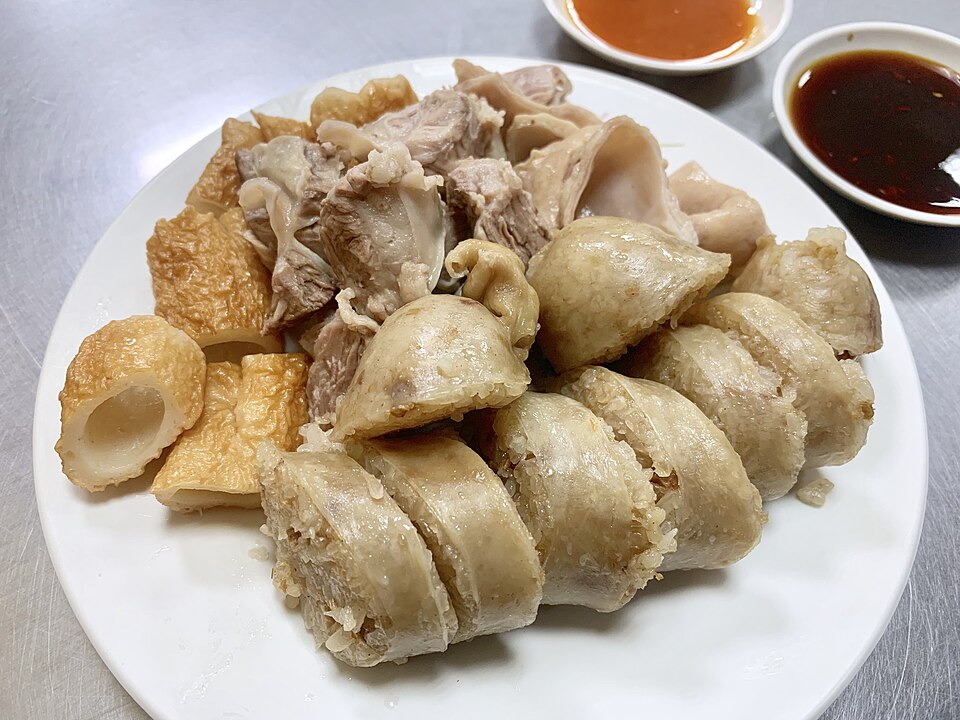
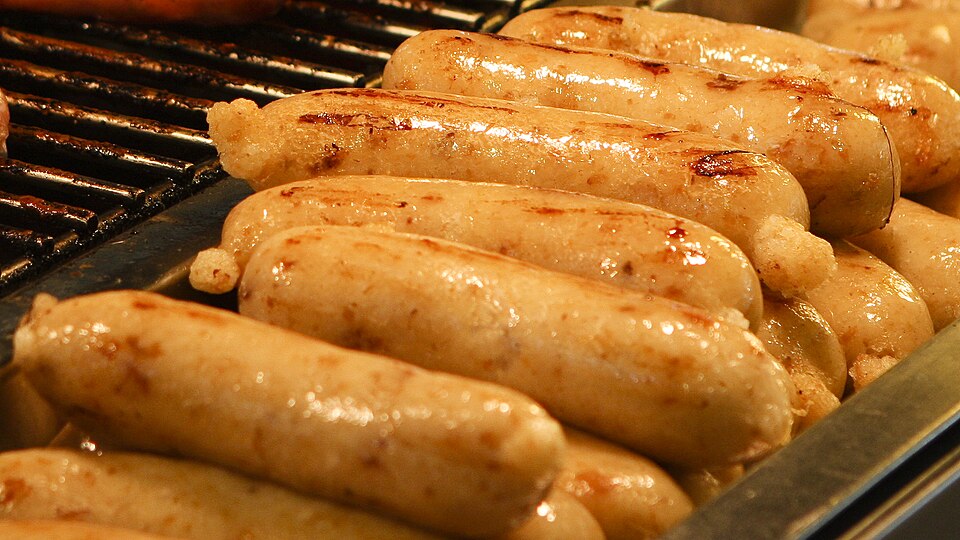
Sticky rice sausage (糯米腸) is a length of pig's large intestine packed with glutinous rice and steamed. In Taiwan it is also called 米腸 or simply 大腸, "large intestine". Grill stalls sell it on its own or split open around a pork sausage, a snack known as sausage in sausage (大腸包小腸).
Where it came from
Rice-stuffed intestine has relatives across Asia. Chaoshan versions add cured pork, and Korean sundae contains pig's blood. The Taiwanese filling is simpler, mostly rice with fried shallots, white pepper and peanuts, and is closer to Fujian practice.
Older Taiwanese rice sausages were about 15 to 20 cm long and sold by weight. During the economic slump of the 1990s a smaller version without peanuts appeared. The sausage-in-sausage snack was created in Taiwan in the late 20th century.
Supply has had its shocks. After foot-and-mouth disease hit Taiwan in 1997, local pig intestine could not be bought, and makers switched to imported casings. Edible artificial casings are also used. They are whiter and more uniform, and their ends look tied, while natural intestine closes up by itself in hot water.
How it is made
Wholesalers buy intestine from the slaughterhouse before dawn, rub it with salt and flour to clean it, then soak it. The rice is soaked and seasoned, often with peanuts and fried shallots, and pushed into the casing by machine. Southern makers use raw rice and cut the casing into lengths before cooking. Northern makers start with cooked rice and leave the casing uncut, so it needs less steaming. The sausages are steamed and cooled, then reheated or grilled to order.
How to eat it
It is a snack, bought by the piece at grilled-sausage stalls and night markets. For sausage in sausage, the grilled rice sausage is split and a pork sausage tucked inside, usually with raw garlic. Fuller versions add pickled bok choy, pickled cucumber, chilli, wasabi or thick soy paste. Some grill shops serve a light pork-bone soup alongside.
Around Taiwan
- Kaohsiung
- San Lun De Dian (三輪的店) in Fengshan, founded in 1961, makes its rice sausage with local glutinous rice, peanuts and fried shallots and grills it over charcoal. In Sanmin, Hsin Ta Kang (新大港大腸香腸) has run its sausage grill for three generations.
- North
- Northern makers use rice that is already cooked and leave the casing uncut, so steaming takes less time.
- South
- Southern makers fill the casing with raw glutinous rice, often with peanuts, and cut it into lengths before steaming.