What it is
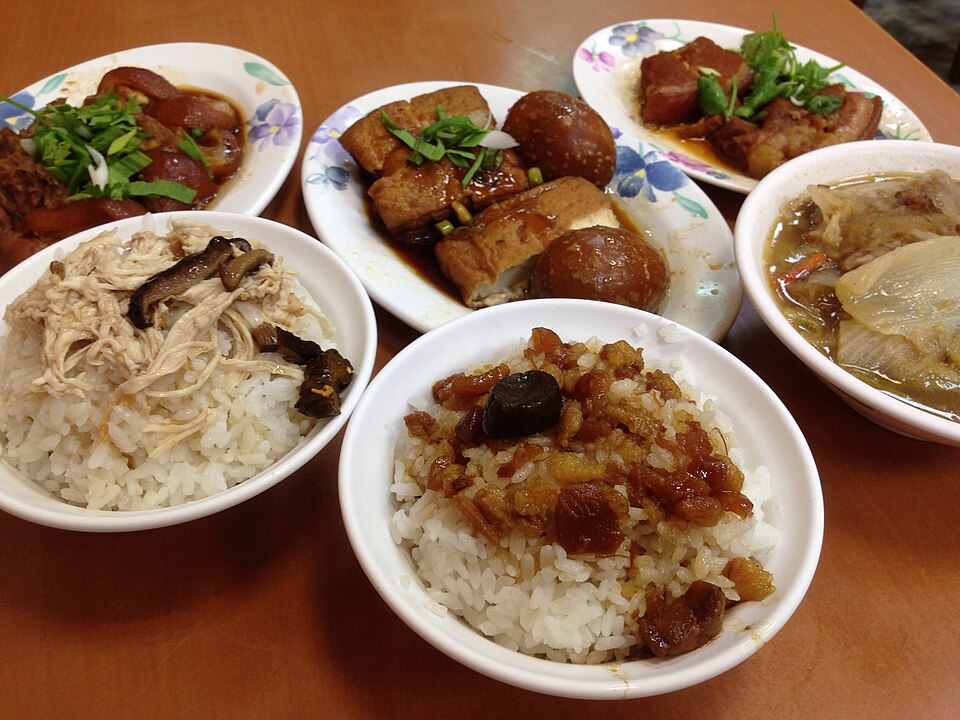
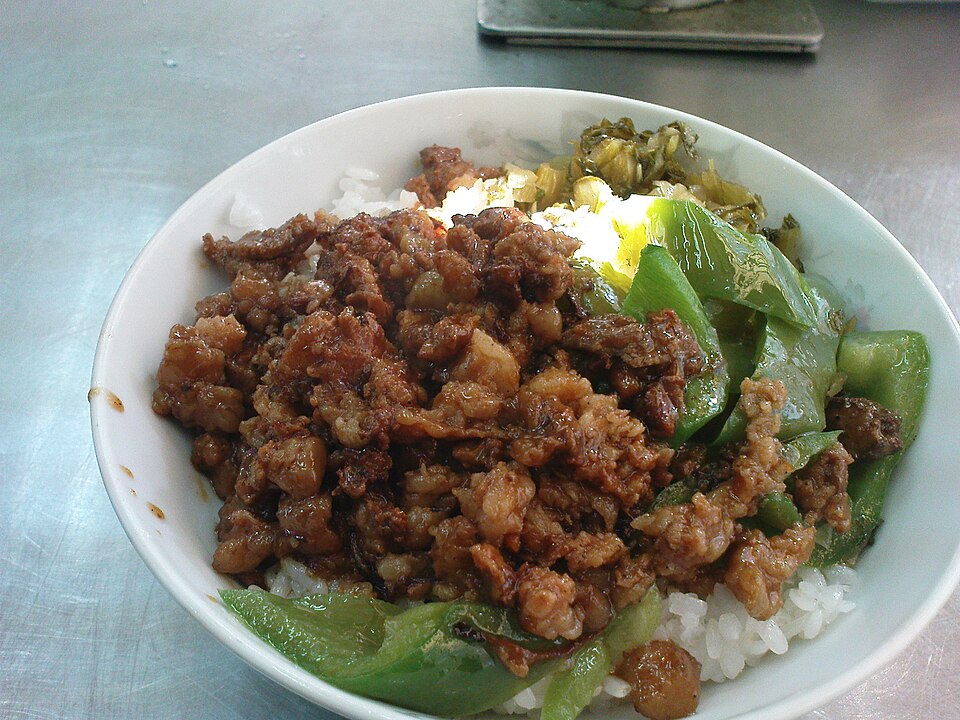
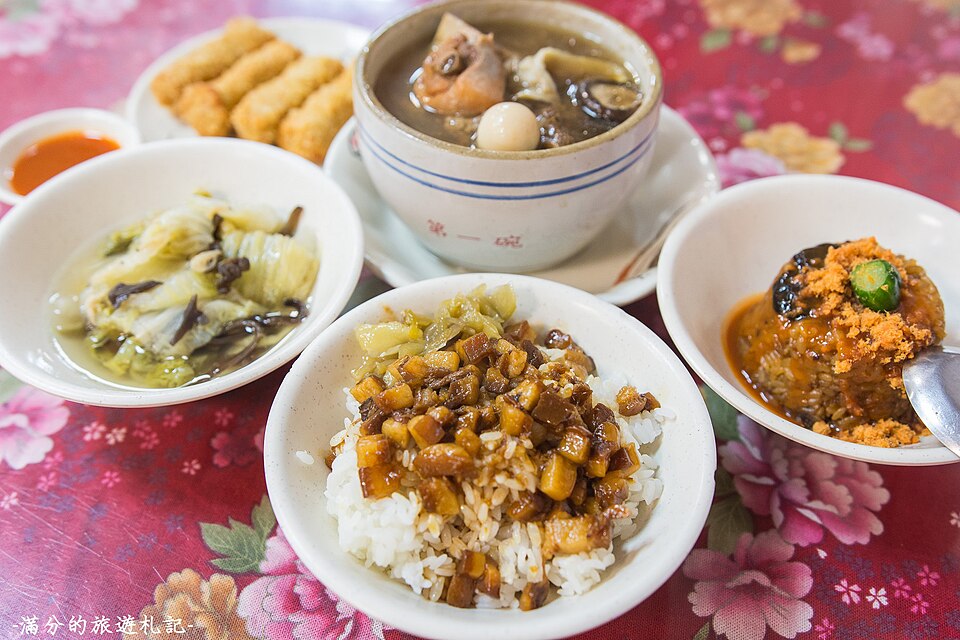
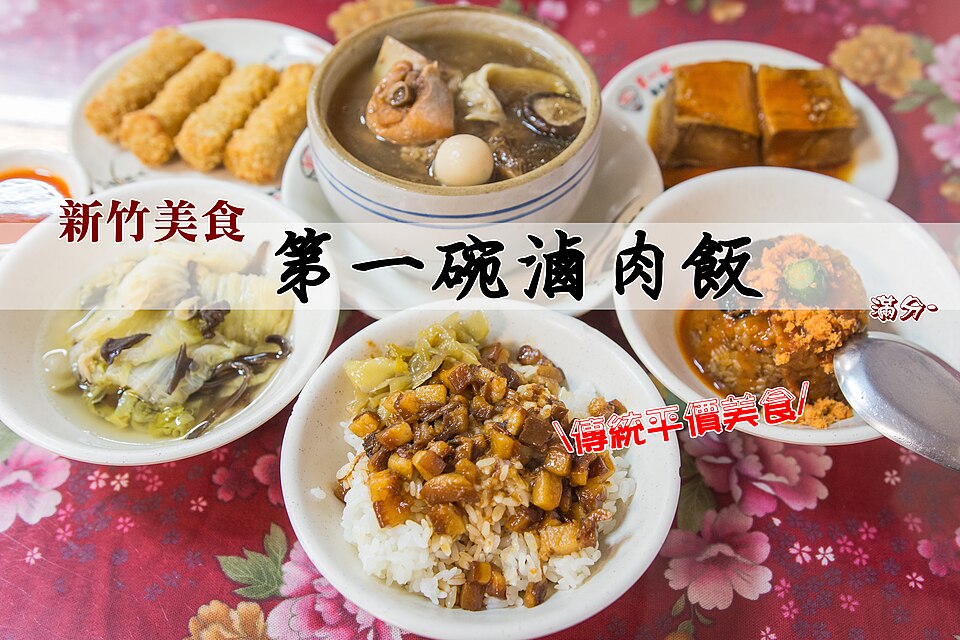
Braised pork rice (滷肉飯) is a small bowl of steamed rice topped with a spoonful of chopped pork and its sauce. The pork is braised in soy sauce until sticky, usually with red shallots, and the sauce defines the dish. It is common across Taiwan and in southern Fujian. Many shops write 魯肉飯; southern menus often say 肉燥飯.
Where it came from
The dish may be younger than it looks. Hokkien dictionaries from the Qing and Japanese colonial periods record soy-braised pork (鹵肉) but no rice dish of that name, so the food historians who wrote 吃的台灣史 suggest it appeared after the Second World War. One theory holds that poor families who could not afford meat asked butchers for leftover skin, fat and scraps, braised them with soy sauce and shallot oil, and that street stalls later improved the recipe.
The name caused a row in 2011. That April, the Taiwan edition of Michelin's Green Guide said the dish came from Shandong. Taipei blamed the character 魯, an old name for Shandong, in the popular spelling 魯肉飯. Mayor Hau Lung-bin wrote to Michelin asking for a revision, and in August the city handed out more than 1,000 free bowls to make its case. Michelin said it would make the changes in reprints and future editions. The city urged people to write 滷, meaning braise, though the largest braised pork rice chain, 鬍鬚張 (Formosa Chang), still uses 魯.
How it is made
Cooks fry the pork, often belly, in oil with sliced shallot, then simmer it in soy sauce. Sugar, rice wine, pepper or five-spice may go in. Long, slow cooking draws gelatin out of the skin, which gives the sauce its sticky body. Seasoning and control of the heat matter more than an expensive cut. Hand-cutting is preferred to machine mincing, and a mix of skin, fat and lean meat is thought better still.
How to eat it
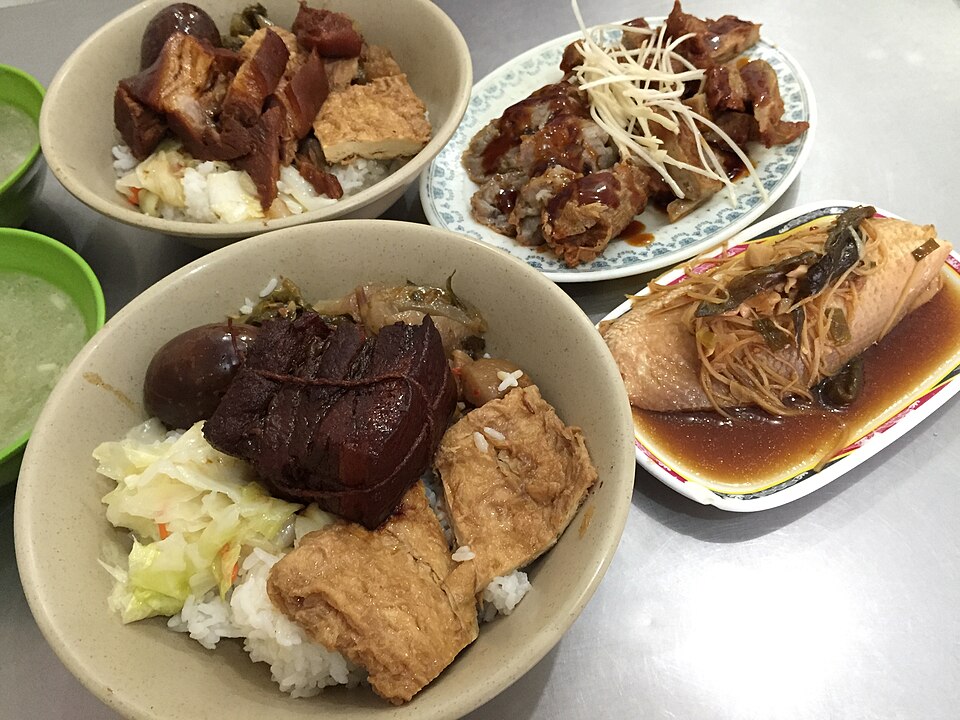
It is everyday food, often ordered as a small bowl with a few side dishes. Common extras include a fried egg with a runny yolk, pickled mustard greens or radish, and a shop's own chilli sauce. Older stalls served yellow pickled radish (takuan, a Japanese pickle) on the side, but many no longer do.
Around Taiwan
- Tainan
- Tainan's 飯桌仔 canteens (Michelin's spelling: fan zhuo zai) let diners pick ready-cooked dishes to eat with rice. Fu Tai Table Third Generation (福泰飯桌第三代), heir to a stall started over 80 years ago, brings its small plates stacked on a tray. One Anping version is sweet in the southern way.
- Kaohsiung
- Cianjin Braised Pork Rice (前金肉燥飯), a family business dating from 1959, has long been a Kaohsiung breakfast. Its sauce is made with pork back fat. Regulars add crunchy fried milkfish floss or an over-medium duck egg, letting the yolk run into the rice.
- North
- In northern Taiwan 滷肉飯 means chopped pork in sauce, traditionally hand-cut and mixing skin, fat and lean. Northerners tend to like a greasier version, sometimes with glutinous rice mixed in. Rice under a slab of braised belly is a different dish here, 焢肉飯 (khòng-bah-pn̄g).
- Central
- Taichung has 肉角飯, which adds chunks of meat to the skin and fat of the southern-style sauce. Changhua is known for 焢肉飯, usually made with belly or the upper hind leg, and the county government once held a festival for it.
- South
- Southern menus usually call the chopped version 肉燥飯 (bah-sò-pn̄g), and 滷肉飯 there can mean braised belly over rice. Accounts of the southern sauce disagree. One says it uses leaner pork; another says it is nearly all skin and fat, cut into bigger cubes.