What it is
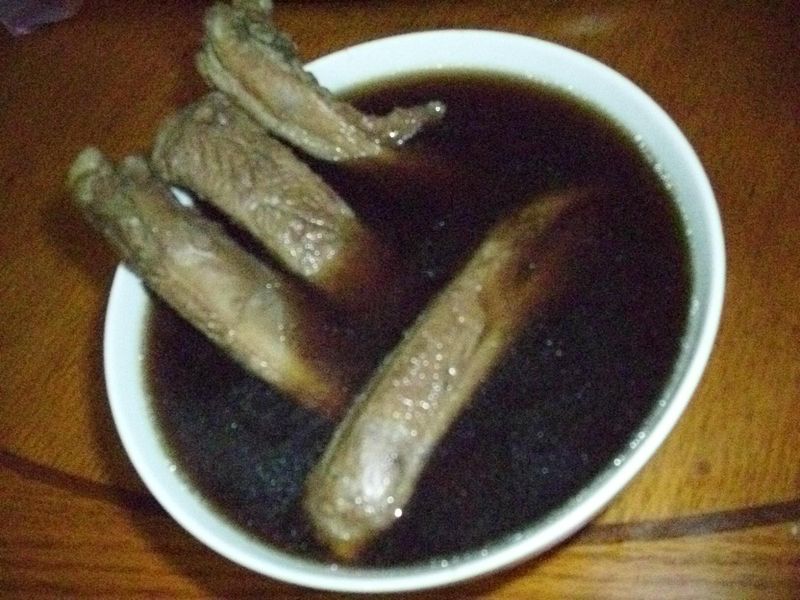
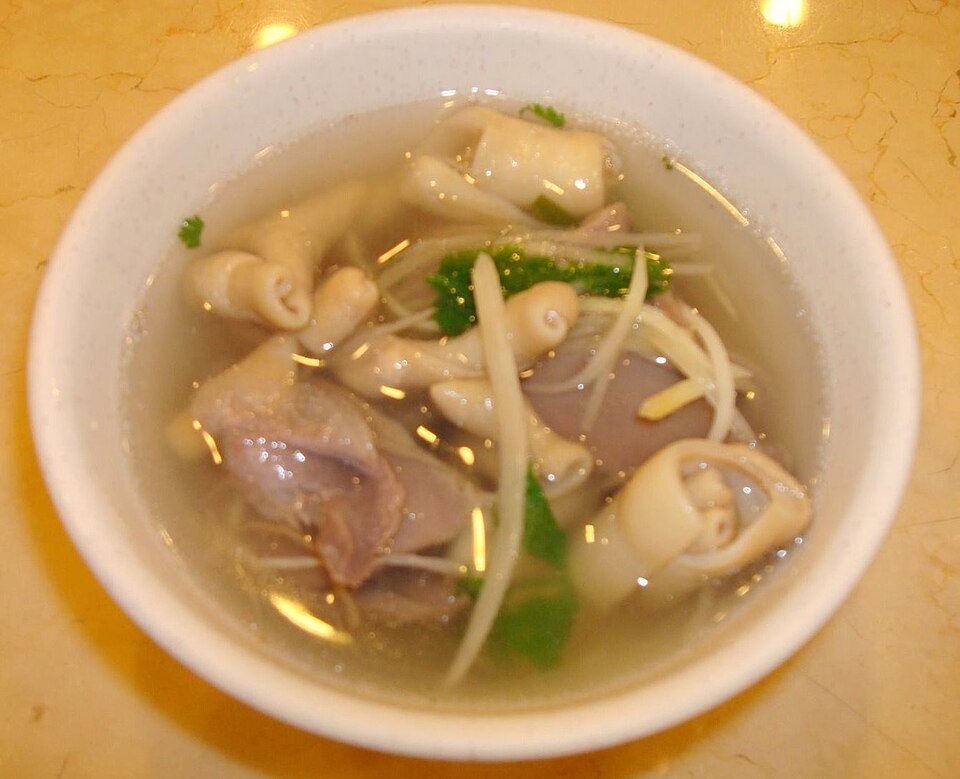
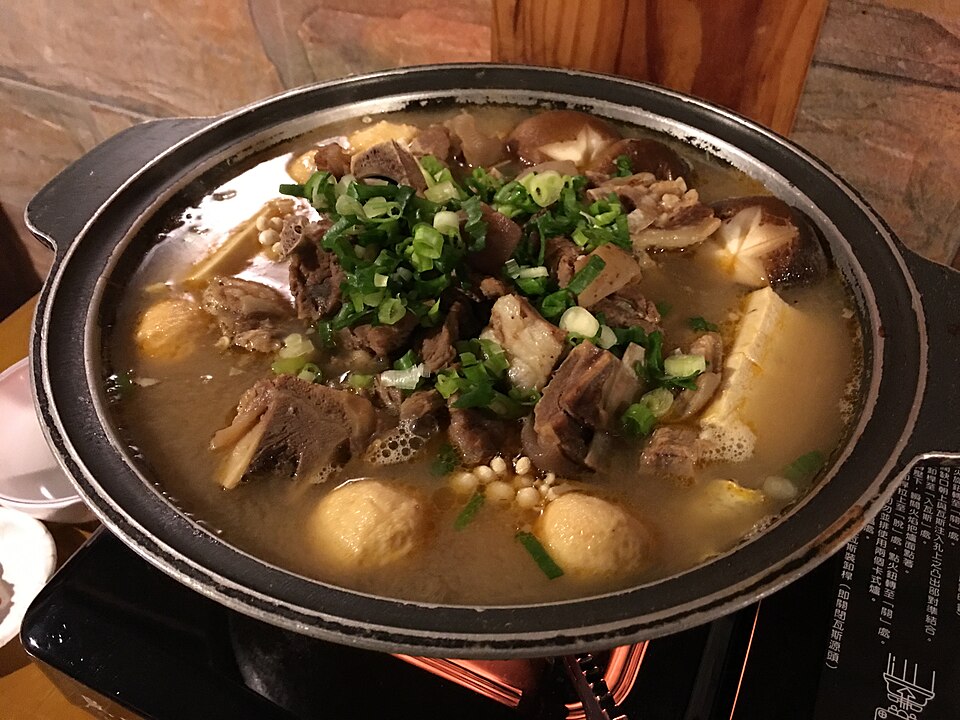
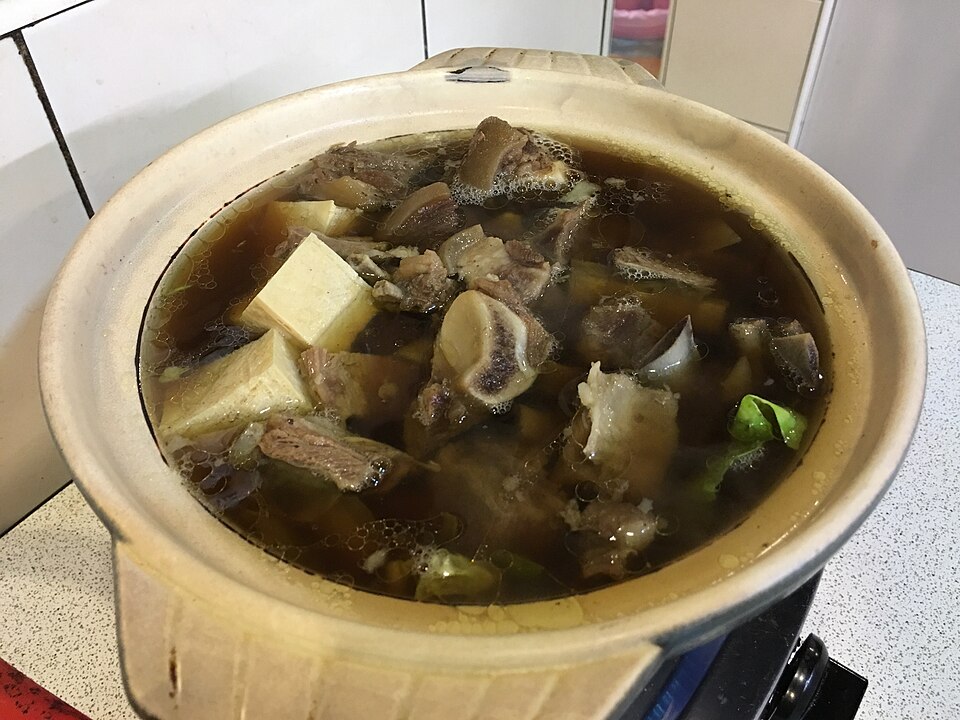
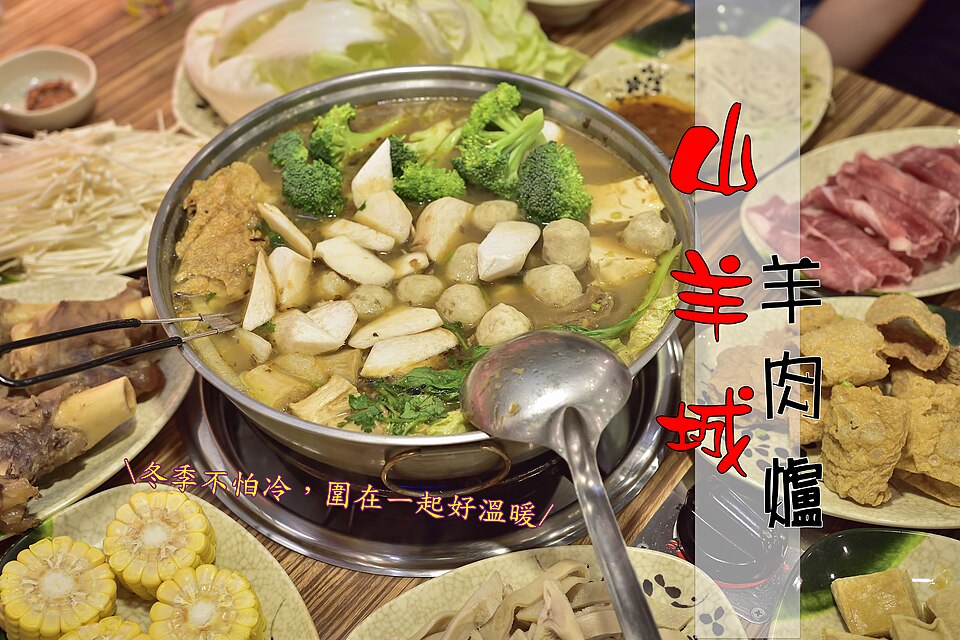
Goat meat soup (羊肉湯) is sliced goat in broth, sold by goat restaurants as a quick bowl or alongside stir-fries and hot pot. Some shops keep the broth clear, made only from meat and bones. Others add angelica root (當歸, dang gui). Versions with rice noodles are common. Bilingual menus mix up lamb, sheep and goat, so the English name varies.
Where it came from
Goat soup is older than goat hot pot. In Taiwan's farming era people did not eat beef, and goat was the meat chosen to build strength. Yu Zhuang (余壯) is said to have been the first to sell goat soup in the old market of Gangshan (岡山), in northern Kaohsiung, in 1926, and skin-on goat is also said to have started with him. Herbs were added to tame the smell of the meat. Gangshan raised few goats itself. They came from nearby Tianliao and Alian, and goat traders joined the crowds at the fairs held around Shoutian Temple.
From the Japanese era, travelling vendors in Gangshan and in Xihu (溪湖), Changhua, sold goat soup, goat thick soup, goat with fine noodles and stir-fried goat. Hot pot came much later, from the 1970s by one account and around 1985 by another, and the soup stayed on the menu beside it.
How it is made
For the clear style, goat bones and meat are simmered for hours, sometimes with no herbs at all. Herbal versions add angelica, at some shops near the end for fragrance, and some also use Szechuan lovage (川芎), goji berries and a whole piece of mature ginger. Boneless goat is cut into thin slices. At some Tainan shops the raw slices go into the bowl and boiling broth cooks them, leaving the meat pink and tender.
How to eat it
In Tainan it is often breakfast, and the best-known stalls open very early and sell out by late morning. Ask for plain meat or other cuts, in soup or dry with a little sesame oil. In Gangshan people order it with a grilled rib or a stir-fry and fine noodles tossed in goat fat (羊油麵線). Shops may set out soy paste and bean paste for dipping.
Around Taiwan
- Tainan
- In Tainan the soup is often breakfast. No Name Lamb Soup (無名羊肉湯) and, in Xinhua, Lien Wu Chiao (蓮霧腳羊肉湯) both buy freshly slaughtered meat every day, and BAA Wanli (咩灣裡羊肉店) gets its goats from Shanhua (善化).
- Kaohsiung
- Gangshan is the goat town. Te Chang Goat Meat (德昌羊肉) dates itself to 1944, when it was a market stall selling goat rice-noodle soup, and still lists clear, angelica and offal soups. In Fongshan, Liang Bo (倆伯羊肉) is known for an angelica goat soup.
- Central
- Xihu (溪湖) in Changhua is Taiwan's other goat town. Its vendors sold goat soup and stir-fried goat from the Japanese era, long before goat hot pot caught on there.