What it is
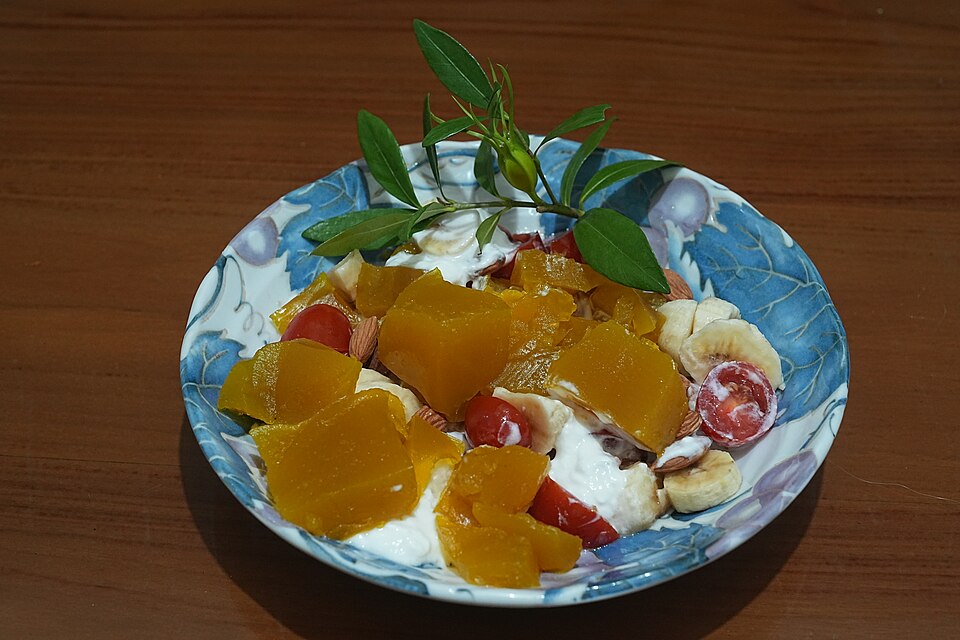
Grass jelly (仙草) comes from Chinese mesona (Platostoma palustre), a herb of the mint family. Its dried stems and leaves are boiled into a near-black liquid. Set with starch, this becomes a smoky, faintly bitter jelly (仙草凍). Served warm as a thick pudding, it is hot grass jelly (燒仙草). Brewed thin, it is grass jelly tea (仙草茶).
Where it came from
The name means "immortal's herb", and folk stories explain it in several ways. In one, travellers struck down by heat recovered after drinking a brew of the dried plant. In another, a little boiled herb set into a surprising amount of jelly, which seemed like a gift from the immortals.
The Hakka are closely linked with the plant, and historically used it against heatstroke after long days in the fields.
In Taiwan the herb grows in hill country below about 1,200 metres. Guanxi (關西), a Hakka township in Hsinchu County, has the largest planted area and produces more than half the national crop. Guanxi was once known for its export tea, but a downturn and damage to the tea's reputation hit the trade. From 1989, under a "one township, one speciality" policy, the township turned to grass jelly instead. Other growing areas include Xinwu and Yangmei in Taoyuan, Tongluo in Miaoli, Ershui in Changhua and Shuishang in Chiayi.
How it is made
Farmers plant in March or April and harvest in autumn. The herb is sun-dried until it oxidises, much as tea leaves do. Some makers keep it for a year or more, since it grows more fragrant with age. The dried herb is boiled for hours into a dark extract. Some makers add an alkali to draw out more gel; others refuse it. Starch is stirred in and the liquid sets as it cools. For the hot version, the jelly is heated into a thick, pudding-like dessert.
How to eat it
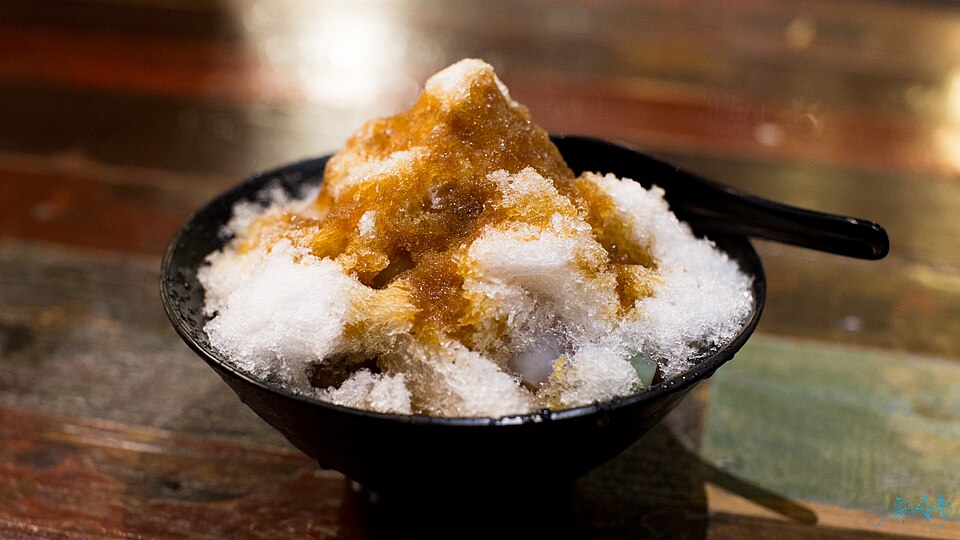
In summer, cold jelly goes into syrup, shaved ice or bubble tea, and grass jelly tea is a common drink. In winter, hot grass jelly comes in a cup or bowl topped with tapioca pearls, taro balls, red beans or small rice balls. Ask for 燒仙草 for the hot pudding and 仙草凍 for the cold jelly.
Around Taiwan
- North
- Guanxi in Hsinchu County leads production. Its farms grow the Taoyuan No. 1 variety, chosen for strong aroma and good setting, and sell grass jelly powder and nougat. The township also holds a grass jelly festival.
- Hakka
- Hakka cooks simmer herb dried for a year or more with chicken, usually for two to three hours, to make grass jelly chicken soup (仙草雞湯). Pork ribs are stewed the same way (仙草排骨).