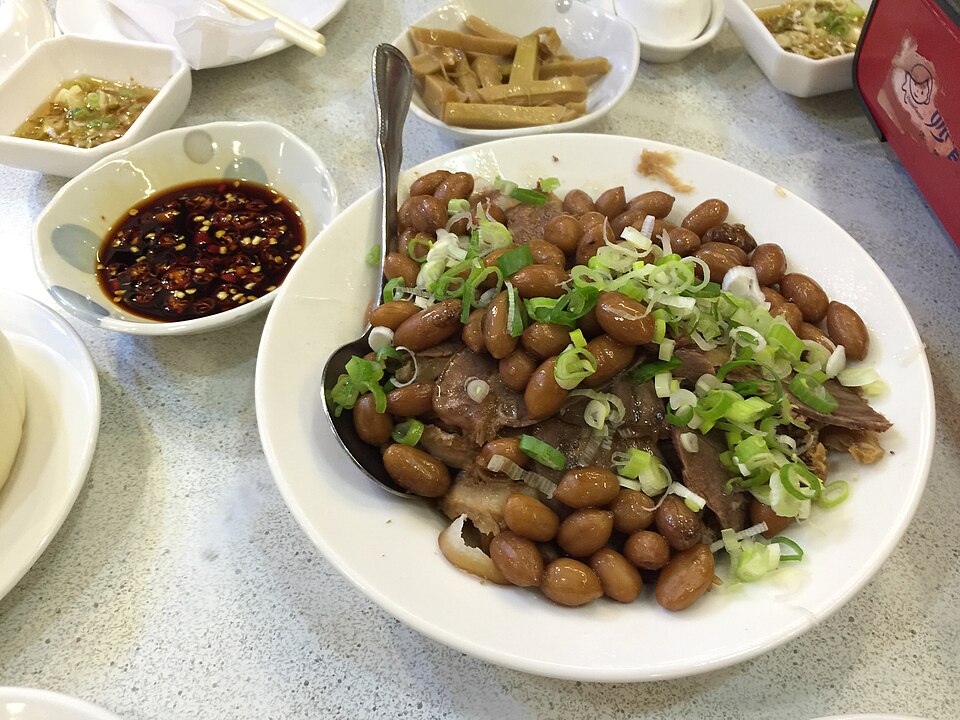
What it is
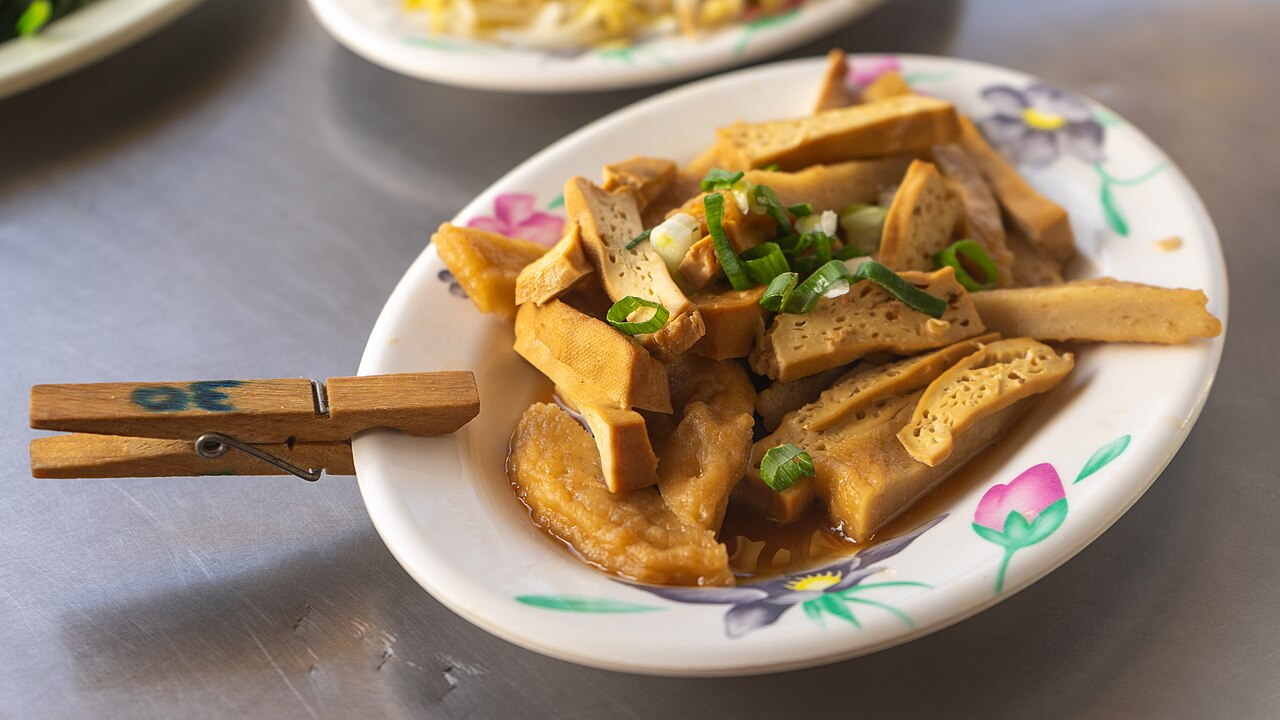
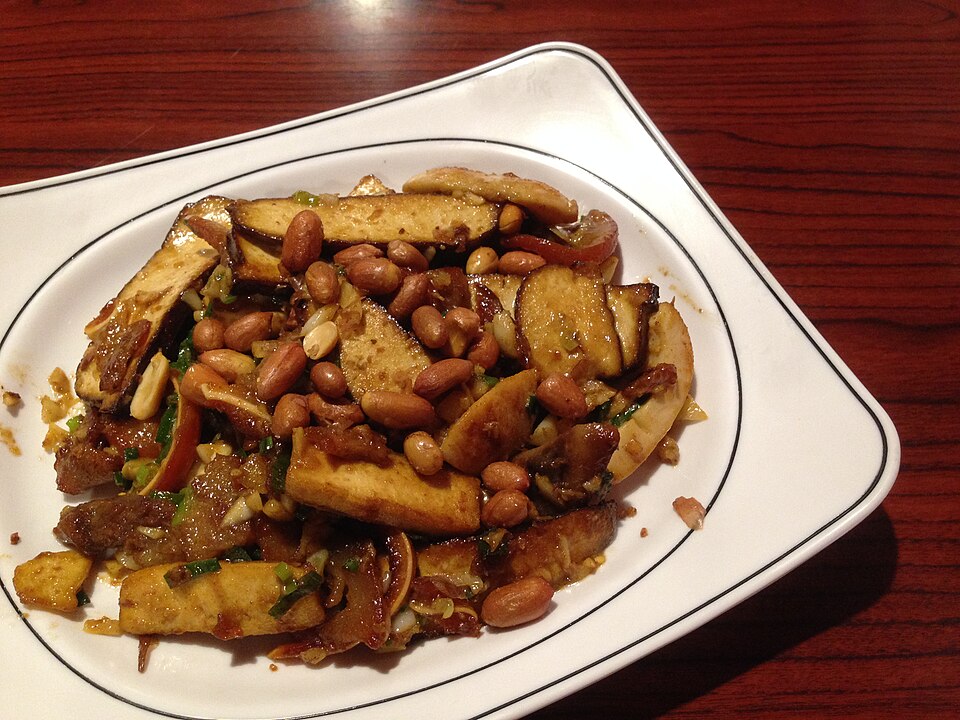
Lu wei (滷味, roughly "braised flavours") is food simmered in a seasoned soy stock. Stalls and shops sell it in most Taiwanese towns. Typical items are dried tofu (豆乾), layered tofu (百頁豆腐), rice blood cake (米血糕) and kelp, alongside eggs, pork cuts, beef shank and tripe. Shops guard their stock recipes closely.
Where it came from
Braising in seasoned stock has a long history in Chinese cooking. Some scholars trace it back about 2,000 years to Sichuan, where well salt was combined with local Sichuan pepper. In Taiwan, post-war migrants added a military-village (眷村, juancun) style, with braised beef shank and tripe. A plain braise of stock and salt, originally a Chaozhou style, is rare and mostly found among cooks trained in juancun cooking.
The first lu wei was eaten cold. A heated style followed as busy workers looked for quick hot meals. The Gai Bang (丐幫滷味) chain calls itself the pioneer. Its founders sold cold, Hunan-recipe snacks from a bubble tea shop in Changhua, began heating orders in broth in 1991 and started franchising in 1992.
How it is made
The stock is built on soy sauce, spring onion, ginger, rice wine and rock sugar, with spices such as star anise, cao guo (black cardamom), liquorice and Sichuan pepper. Items are braised, cooled and displayed. Market vendors traditionally slice cold pieces to order and pour hot stock over. At heated stalls, customers pick items into a basket, and staff reheat them in the stock.
How to eat it
At a noodle shop, a sliced mixed plate is the usual side, often with a soy-paste dip. At a heated stall, pick items into a basket and hand it over to be cooked in the stock.
Around Taiwan
- Kaohsiung
- Hamasen Lu's Shantou Noodles serves a platter of baby squid, fish-and-pork sausage and thin-sliced pork cheek braised in a stock of up to 12 herbs. In Gangshan, a factory has taken to braising seafood such as mullet and scallops.
- North
- Daxi in Taoyuan, known for dried tofu made with its clean local water, has its own lu wei style that adds pickled mustard greens to the seasoning.
- Central
- The Gai Bang heated lu wei chain started in Changhua, where its founders switched from cold snacks to reheating orders in hot broth in 1991.