What it is
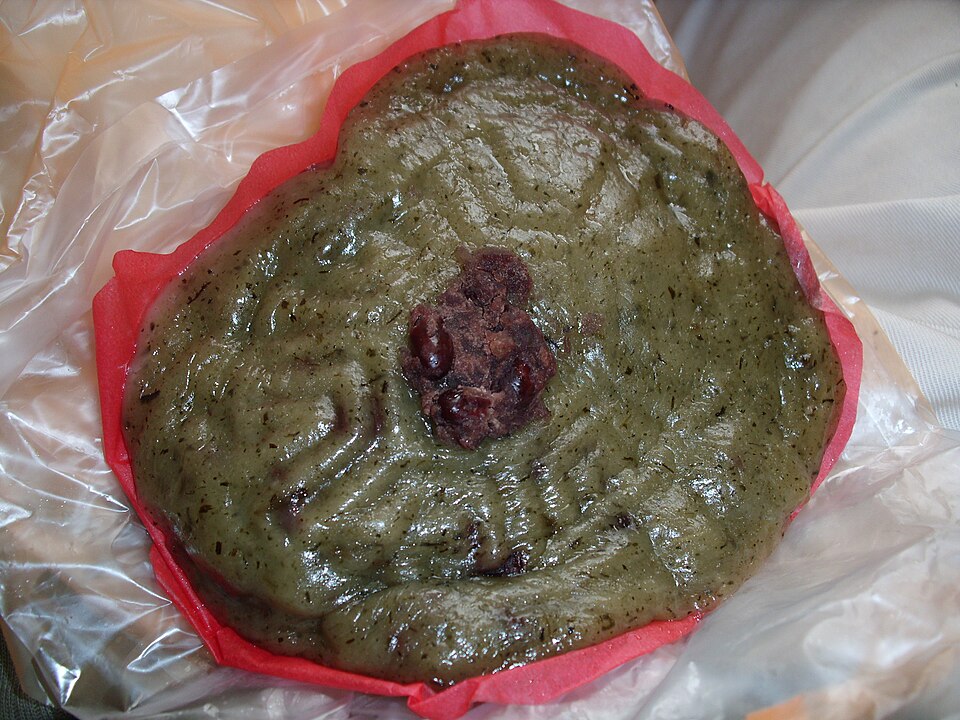
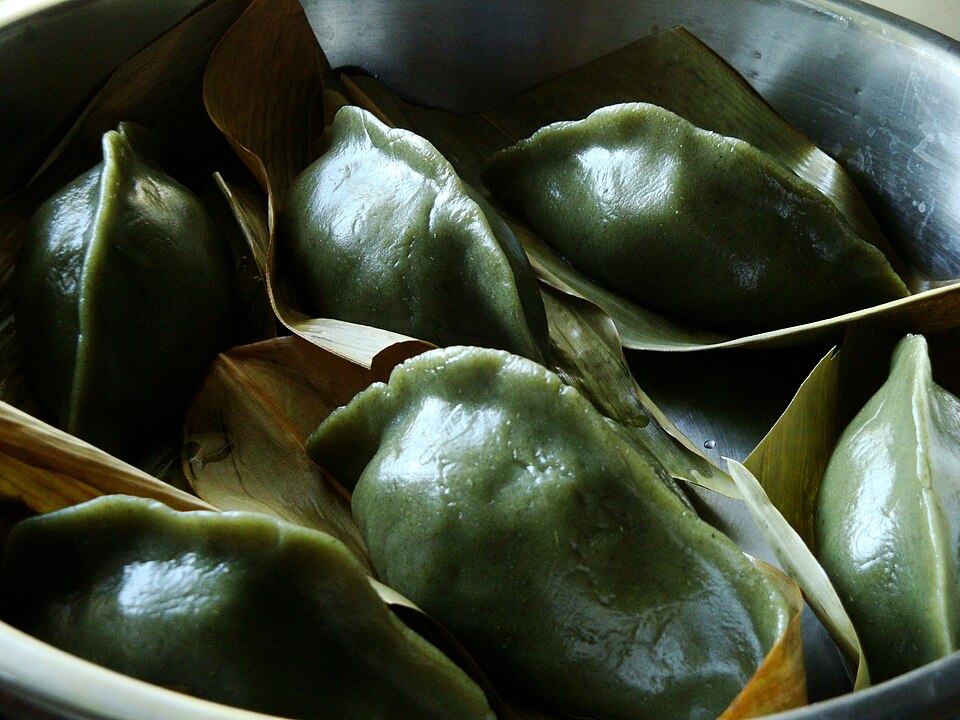
Caozai guo (草仔粿, roughly "herb cake") is a steamed cake of glutinous rice dough kneaded with cooked herbs, which turn it green and give it a grassy scent. It is flat and about the size of a palm. Most are filled with savoury dried radish, and each sits on a square of banana or shell-ginger leaf (月桃葉) so it does not stick.
Where it came from
Herb cakes like this are made in Taiwan and in southern Fujian, around Zhangzhou, Xiamen and Quanzhou. Their link with ancestor worship is old. A Qing-dynasty gazetteer of Taiwan records people gathering cudweed on the third day of the third lunar month, mixing it with rice flour and making cakes as offerings to their forebears.
The cakes are still laid out at Qingming (清明), the spring grave-sweeping festival, and at the Ghost Festival offerings (中元普渡). Offering them is meant to bring the family prosperity. Cudweed is also called 清明草, the Qingming herb.
The herbs are seasonal. Cudweed is picked from about February to March and mugwort from March to May. Factory-made cakes often use green colouring instead.
How it is made
The herb, usually Jersey cudweed (鼠麴草) or, in some Hakka areas, mugwort (艾草), is blanched, squeezed dry and chopped fine. Part of the glutinous rice dough is boiled and worked back into the raw dough, which is then kneaded with the herb. Salted, pressed radish is fried with spring onion and seasoned with sugar, soy and white pepper. Palm-sized pieces of dough are wrapped round the filling, set on leaves and steamed for 15 to 20 minutes.
How to eat it
Rice-cake shops and old-street stalls sell them, many in the morning, and popular shops can run out. They are eaten by hand as breakfast or a snack. Besides radish, savoury fillings include mushroom, dried shrimp and minced pork, and sweet ones use red bean. The cakes spoil quickly, so keep them chilled and eat them soon.
Around Taiwan
- Kaohsiung
- Yu Family Chishan Rice Cakes (尤家赤山粿) in Fengshan makes caozai guo by hand alongside its namesake Chishan cake and a brown-sugar cake. It sells only in the morning, and late arrivals can miss out.
- North
- In Jiufen, A-Lan Caozai Guo (阿蘭草仔粿) took up the cakes when gold miners bought them as Qingming offerings. The craft is now in its third generation, with fillings of dried radish, bamboo shoots or red bean.
- Hakka
- Some Hakka communities use mugwort, which gives a stronger herbal flavour, and call the cake aiban (艾粄). The cudweed version is tian'ai ban (田艾粄).