What it is
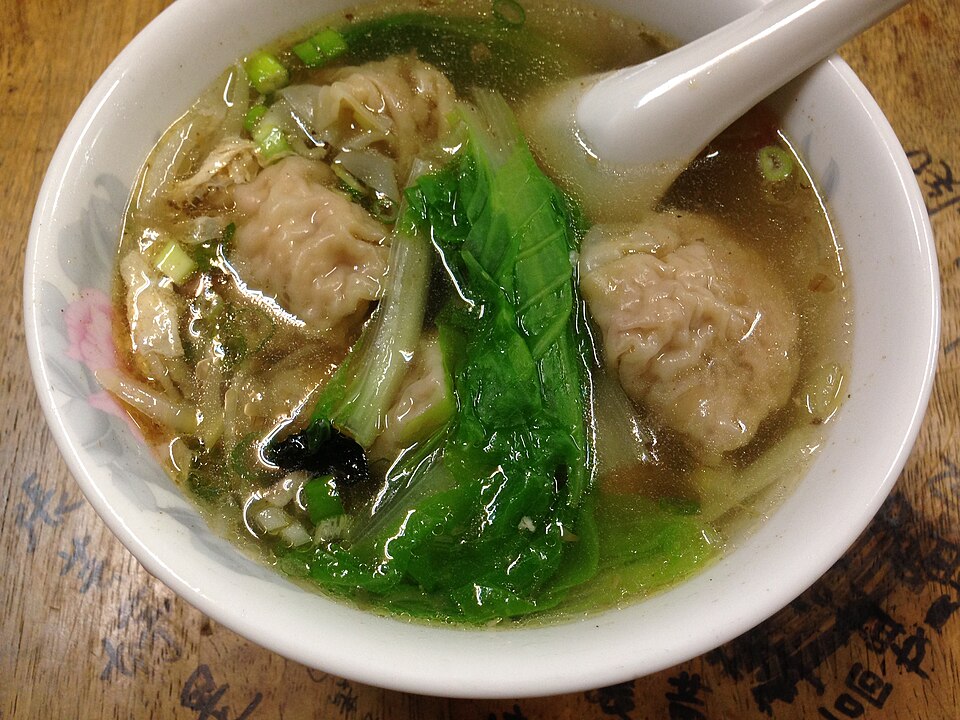
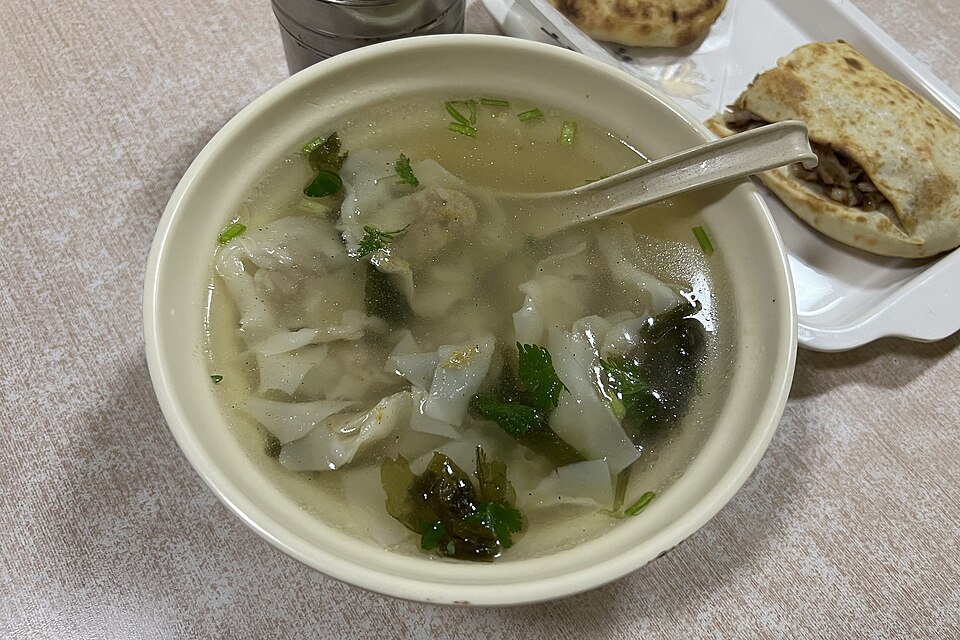
Wontons (餛飩, huntun) are small parcels of seasoned pork wrapped in thin squares of dough. In Taiwan they are sold in clear broth or dry with a sauce. Taiwanese Hokkien speakers call them pián-si̍t (扁食), Sichuan-style shops sell them as chaoshou (抄手), and the big Wenzhou style (溫州大餛飩) has its own specialist shops.
Where it came from
Wontons are an old dish of the Chinese world. A traditional explanation links the name to hundun (混沌), 'chaos', for a sealed parcel with no openings; the written form later took the food radical. Names for wontons and other dumplings began to be told apart around the Tang dynasty, and examples from the 7th and 8th centuries have been found at Turpan in Xinjiang. Each region kept its own name: wantan in Cantonese, chaoshou in Sichuan and pián-si̍t in Hokkien.
Wenzhou big wontons took shape in Taiwan after the Second World War. They are not found in Wenzhou itself, where wontons are small and thin-skinned. How the style began is disputed. One account credits a Wenzhou woman known as Wen Mama (溫媽媽), who sold them at the old Zhonghua Market (中華商場) in Taipei and later opened a shop on Xining South Road. Another looks to Keelung, which became the main base of Zhejiang migrants after the 1955 evacuation of the Dachen Islands. Liu Bei-bei (劉蓓蓓), a food marketing consultant descended from Keelung's Wenzhou community, suggests that later generations moved to Taipei and made their wontons bigger to stand out.
How it is made
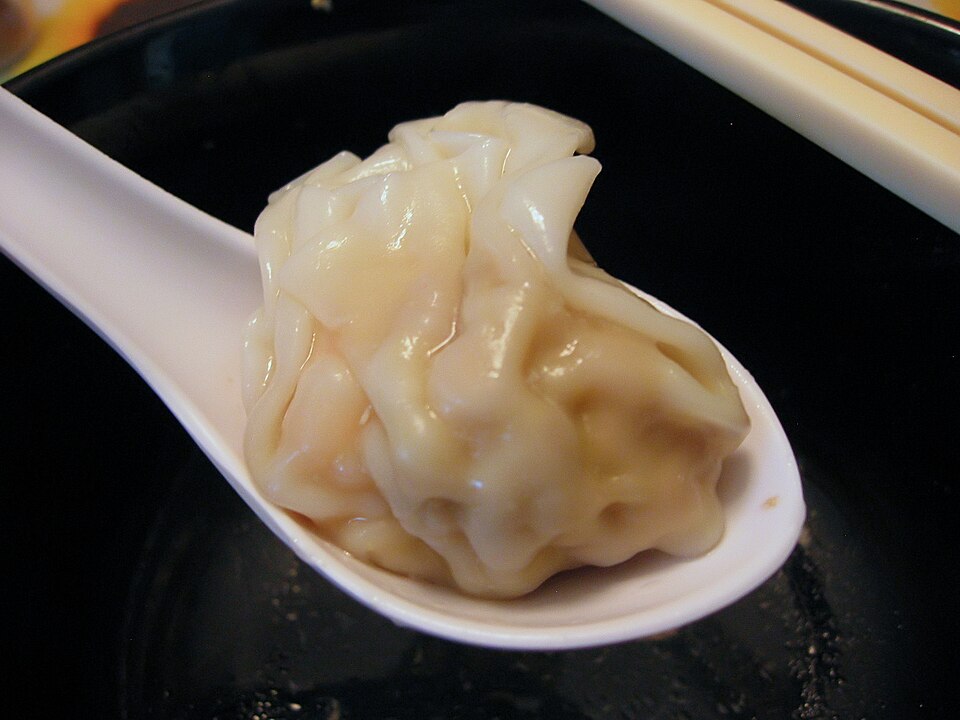
The wrapper is a thin dough of wheat flour, egg, water and salt, cut into squares. A spoonful of minced pork goes in the middle and the corners are folded and pressed shut. Fillings range from mostly lean pork to fattier mixes. Boiled, the wrapper turns translucent and silky. Wenzhou-style wontons are large and generously filled.
How to eat it
Wenzhou-style shops serve wontons in a light broth with seaweed, egg ribbons and preserved mustard stem (榨菜, zhacai), or dry (乾拌, ganban) with sauce. Chilli-oil wontons appear on menus as hongyou chaoshou (紅油抄手). A splash of black vinegar (烏醋) cuts the oil in the dry versions.
Around Taiwan
- Kaohsiung
- Yancheng District has three old big-wonton shops said to share one master's lineage, among them Gold Wenzhou (金溫州, dated 1954) and Hei Chien (黑乾, from the late 1950s). Between them they sell wontons in soup, dry or in chilli oil, with zhacai.
- North
- Keelung's post-war Zhejiang community is one suggested starting point for Wenzhou-style wontons. Another account places the first Taipei shop at the old Zhonghua Market.
- East
- In Hualien, Ye Xiang (液香扁食) has traded for more than 70 years on a single item, pián-si̍t soup: ten wontons in a light bone broth with celery and fried shallots.