What it is
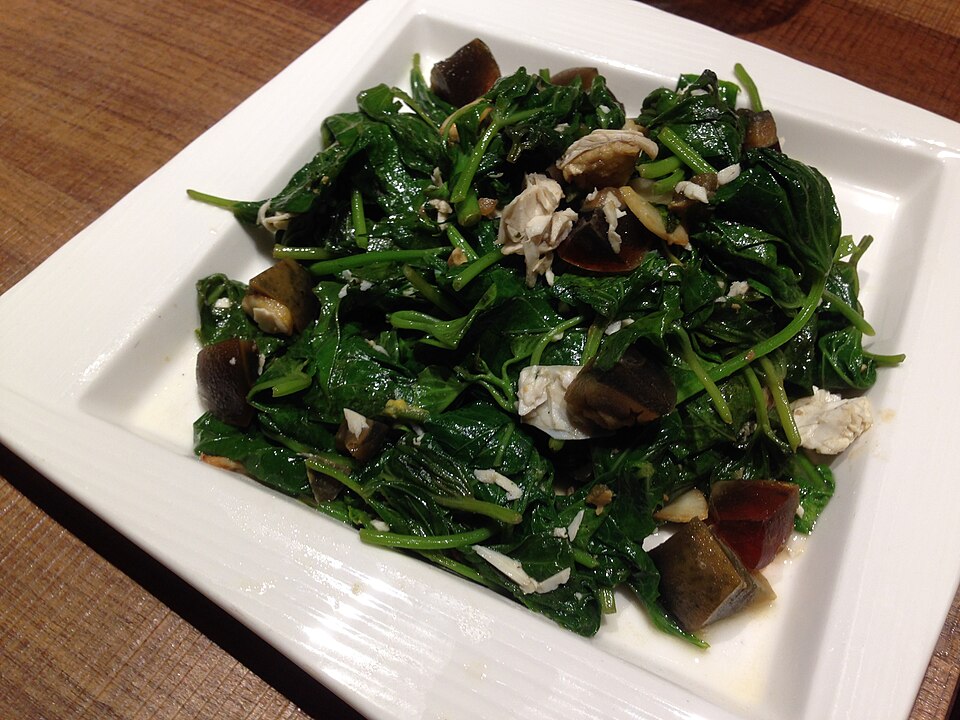
A home-style vegetable dish of leafy greens cooked in a little broth with eggs. The Chinese name 金銀蛋 ("gold and silver eggs") refers to the orange bits of salted yolk and the dark pieces of century egg, and some cooks add a beaten fresh egg as a third. The traditional green is amaranth (莧菜, xiancai), with spinach a common stand-in.
How it is made
Sliced garlic is fried in oil, then the greens go in with water or stock. Diced salted egg and century egg follow, and the pan is covered for a few minutes until the yolk starts to melt into the liquid. Some cooks stir in the salted egg white at the end. Others swirl in a beaten fresh egg so it sets in soft ribbons. The salted egg seasons the dish, so little extra salt is needed, and a spoonful of starch sometimes thickens the broth.
How to eat it
It is the vegetable plate in a shared meal, eaten with rice. Amaranth is a summer crop in Taiwan, mainly from June to October, so it is easiest to find then. Ask for 金銀蛋莧菜 by name. A menu that says 金銀蛋時蔬 uses whichever greens are in season.
Around Taiwan
- Tainan
- At Eat to Fat (添厚), a Bib Gourmand restaurant in an alley beside the Grand Mazu Temple, the dish is listed as 金銀蛋時蔬. Michelin's inspectors call it plain to look at but layered in flavour, thanks to its fresh, salted and century egg.