What it is
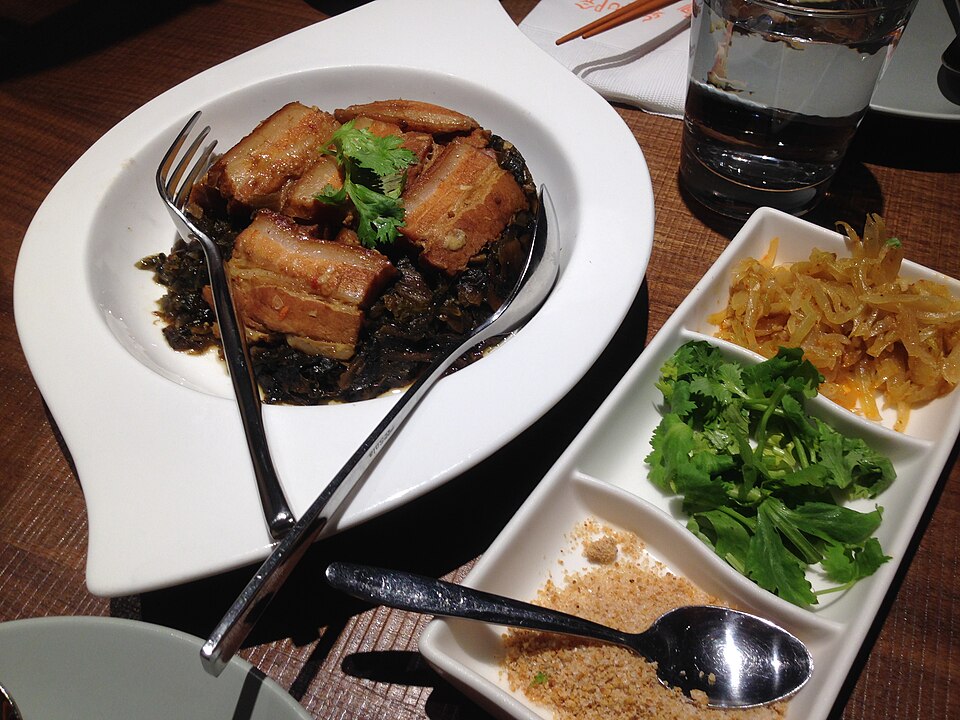
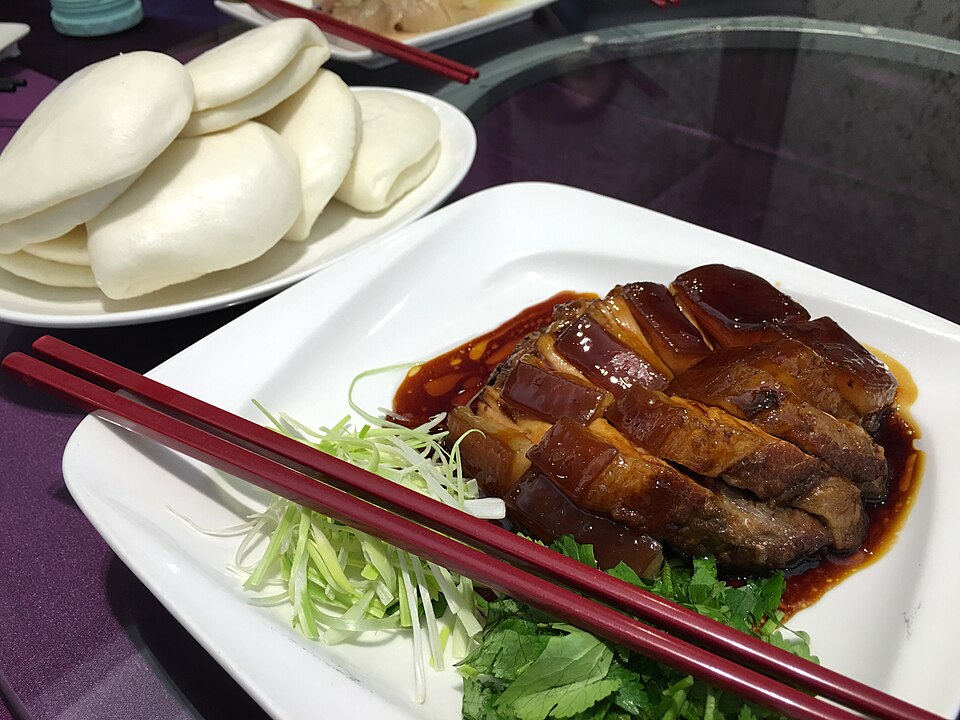
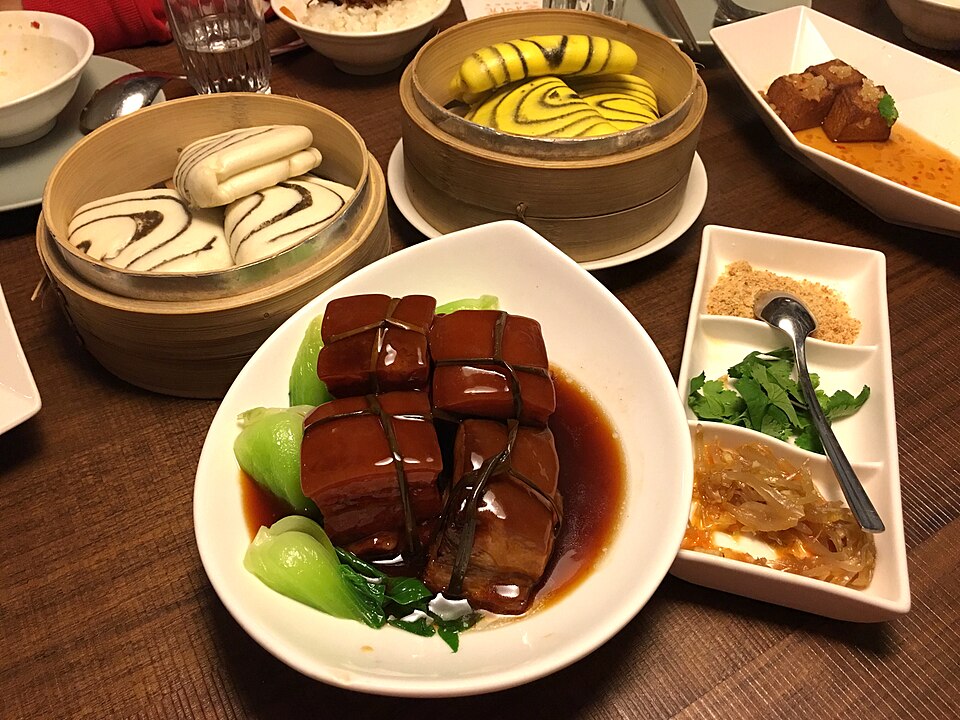
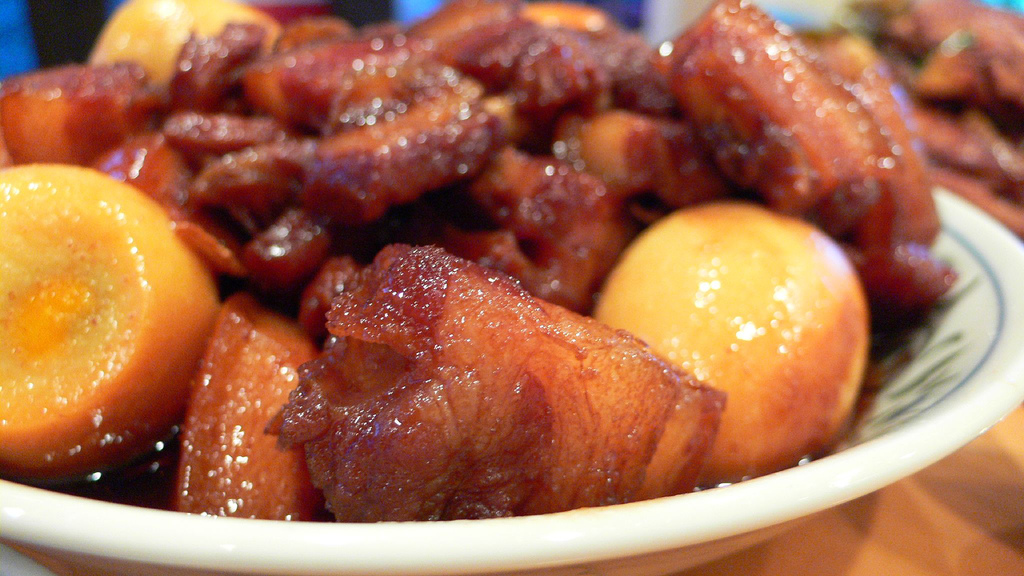
A Hangzhou dish of pork belly with the skin left on, cut into thick squares that are roughly half fat and half lean. Long, gentle braising makes the fat soft and the lean meat tender, and the sauce turns dark and sticky. In Taiwan it is found on Jiangsu and Zhejiang (江浙) menus and in many ordinary restaurants.
Where it came from
The dish is named after the Song-dynasty poet Su Shi, better known as Su Dongpo (蘇東坡). Two legends compete. In one, he worked out the method after he was banished to Huangzhou in 1080, when money was short and pork there was cheap. In the other, set around 1090, he was governor of Hangzhou and had West Lake dredged. Residents sent pork in thanks, and his household cooked it together with wine by mistake, with fine results. A poem praising pork, credited to Su, advises a slow fire and little water, but Chinese Wikipedia doubts it is his. The name 東坡肉 itself is first recorded in Ming-dynasty writing by Feng Menglong and Shen Defu. Kyushu's kakuni (角煮) is thought to descend from it, carried to Ryukyu and Japan by Ming-era sea trade.
In Taiwan the dish belongs to Jiangzhe cooking. Migrants from that region were the largest group among those who arrived with the Nationalist government in 1949, and for decades most of Taipei's well-known restaurants served their food. It is now common enough that neighbourhood stir-fry restaurants (熱炒店) make their own version.
How it is made
The pork belly is cut into squares of roughly five to seven centimetres, skin on. The pieces are often seared first, then braised over low heat for a few hours with yellow rice wine such as Shaoxing (紹興酒), soy sauce and rock sugar. Very little water goes in, so the sauce reduces to a thick, glossy coating.
How to eat it
Order it as one of several shared dishes and eat it with plain rice, which takes up the sauce.
Around Taiwan
- Tainan
- Zhu Xin Ju (筑馨居), a set-menu banquet restaurant in a Qing-era house, counts it as a signature. The owner-chef, 周榮棠, says diners find it melts in the mouth and call it 'pork ice cream'.