What it is
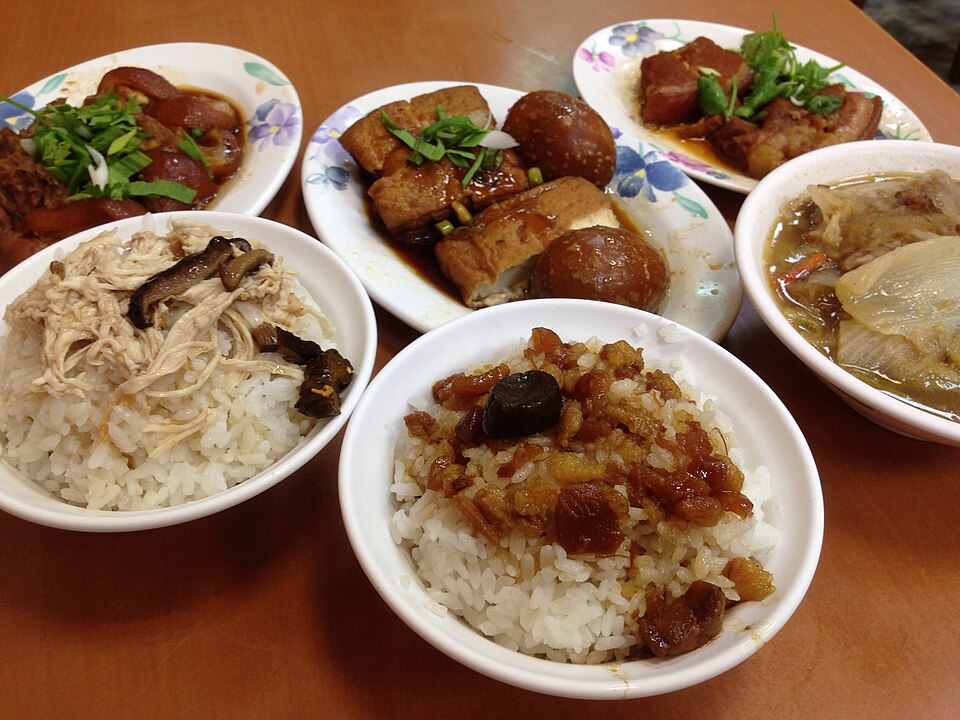
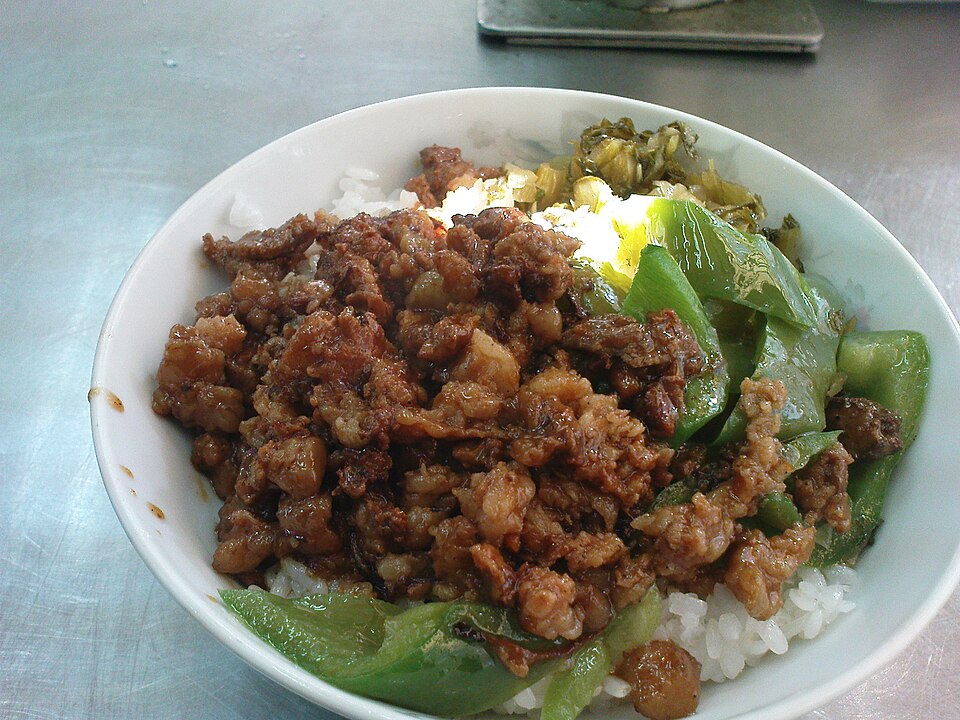
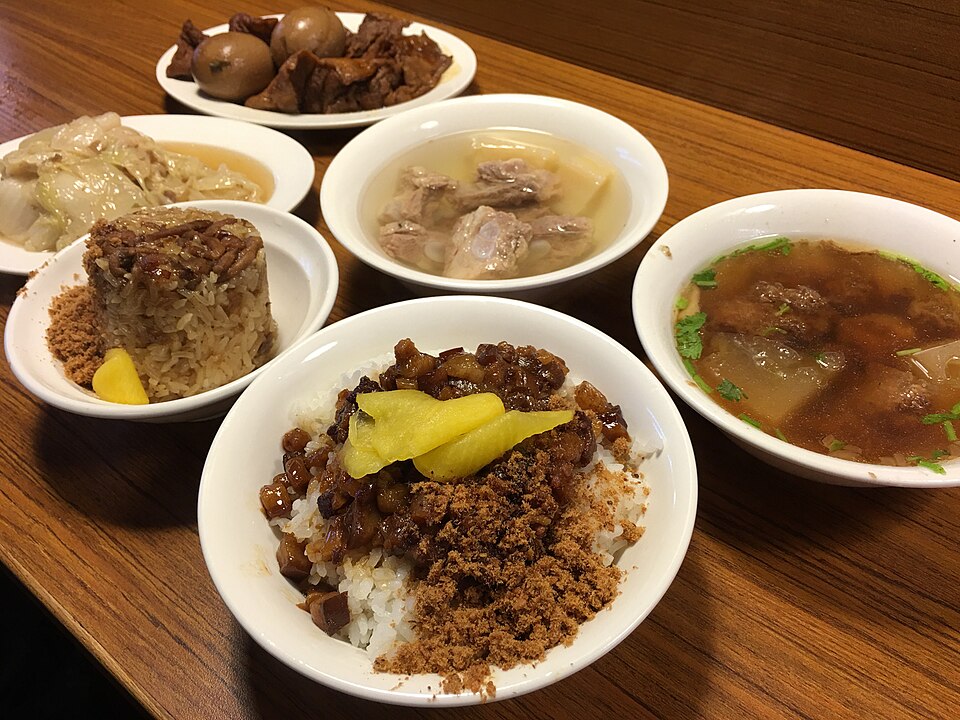
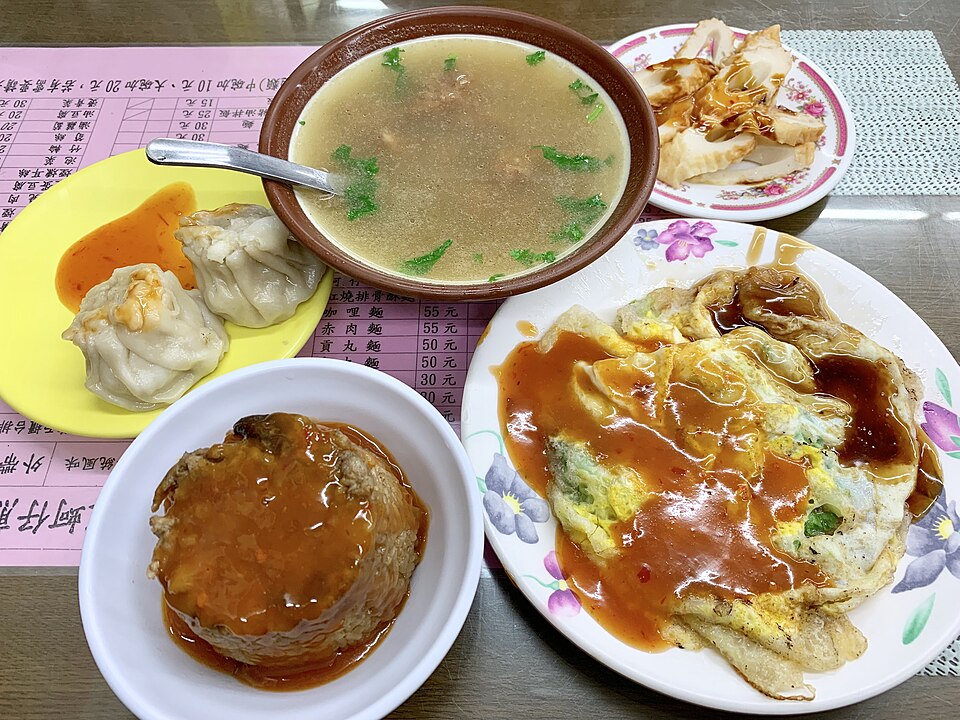
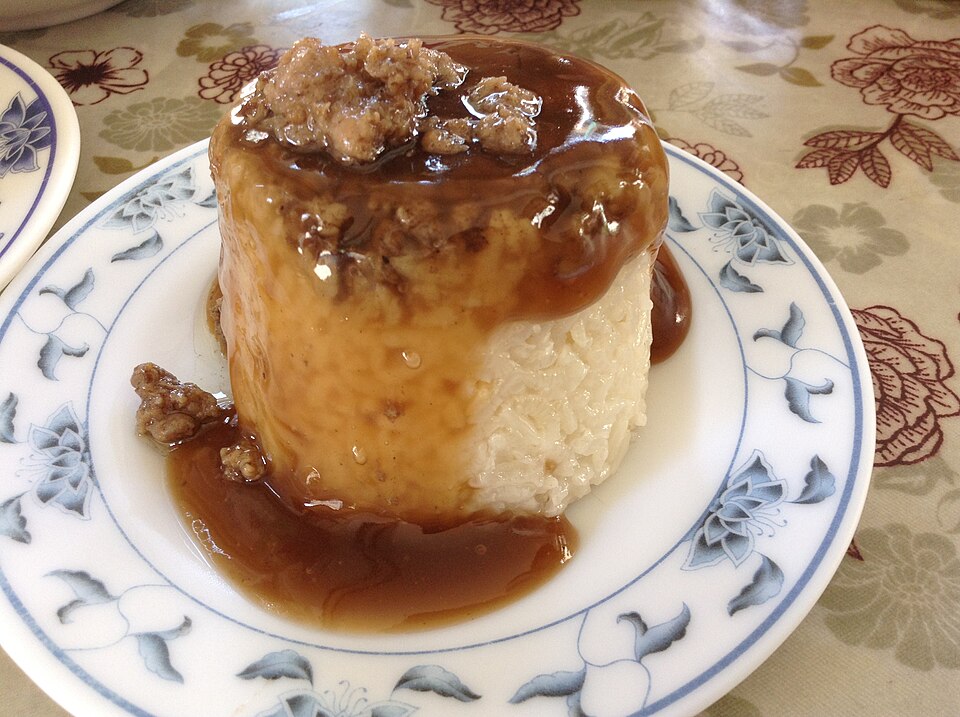
Migao (米糕) is a Taiwanese snack of steamed glutinous rice in two main styles. Southern shops serve the loose rice in a small bowl with braised pork sauce (肉燥), fish or pork floss, and cucumber. Tube migao (筒仔米糕) is steamed in a small cylinder with pork and shiitake, turned out whole and eaten with sweet chilli sauce.
Where it came from
Written history of migao in Taiwan is thin. Taiwan's tourism bureau passes on a tradition, framed as hearsay, that tube migao already appears in Su Dongpo's Qiuchi Biji (仇池筆記) as panyou fan (盤游飯). Bamboo tubes served as the moulds in the early farming era, and small iron tubes later took their place. Food writer Huang Wan-ling (黃婉玲) remembers early tubes moulded from red clay, a version that has nearly disappeared; most tubes today are stainless steel.
Shop histories give firmer dates. Liao Chi (廖記米糕) in Qiaotou, Kaohsiung, has been known for migao since 1955. In Tainan, Hsia Ta Tao Lan and Bao'an Road Migao (保安路米糕) both go back to 1961, and Lo Cheng Migao started in 1985, when an owner known for fried eel and squid took up migao by chance. Da Qiao Tou Tube Rice Pudding in Taipei has served regulars since 1973.
The two styles feed a running argument between north and south. Some southerners mock the tube version as rice locked in a cage, while some northerners mistake a loose bowl for minced pork rice.
How it is made
In the south the rice is steamed and kept loose; Tainan cooks traditionally kept it warm in a big pot set in a woven grass mat (茭苴) under a heavy wooden lid. One Tainan shop slow-cooks its pork sauce from jowl, shallot, garlic, sugar and soy sauce. For tube migao, one Taipei shop stir-fries soaked rice with shallot, garlic and soy sauce and lays braised pork in each mould first. A Tainan recipe presses the rice in gently and steams it for about 40 minutes.
How to eat it
A bowl is small, so most people order a soup alongside. In Tainan the classic partner is sishen soup (四神湯), an herbal soup; some shops also offer fish-skin or pork-cartilage soup. Tube migao is dressed with sweet chilli or haishan sauce (海山醬), and one Taipei shop adds a radish chilli sauce. Some tube shops offer fatty or lean pork.
Around Taiwan
- Tainan
- Tainan rarely uses tubes. Loose rice goes into a bowl with pork sauce and fish floss, traditionally swordfish (旗魚), often with cucumber. Some shops add peanuts or a fish ball. Locals defend the free-form bowl as the proper shape.
- Kaohsiung
- Liao Chi in Qiaotou steams its rice, seasoned with dried shrimp and shallot, in small ceramic cups rather than tubes, then tops it with pork sauce, fish floss and pickled radish.
- North
- Sources disagree on the north. A MICHELIN Guide overview describes northern migao as rice fried with dried shrimp, shredded pork, shiitake and shallot, close to oily rice (油飯). A DailyView survey says tube migao dominates there.
- Central
- Central Taiwan is linked with tube migao. Raw rice and fillings go into cylindrical moulds, are steamed, then turned out and finished with sweet chilli or haishan sauce.
- South
- Across the south the standard is steamed glutinous rice served loose in a bowl with pork sauce, a floss of fish or pork, and pickles or cucumber.