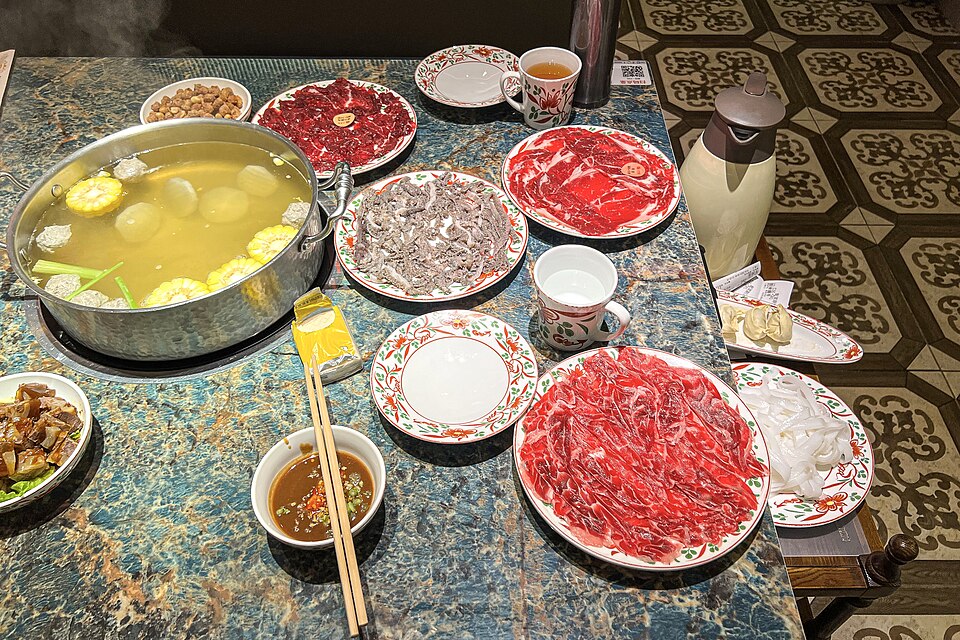
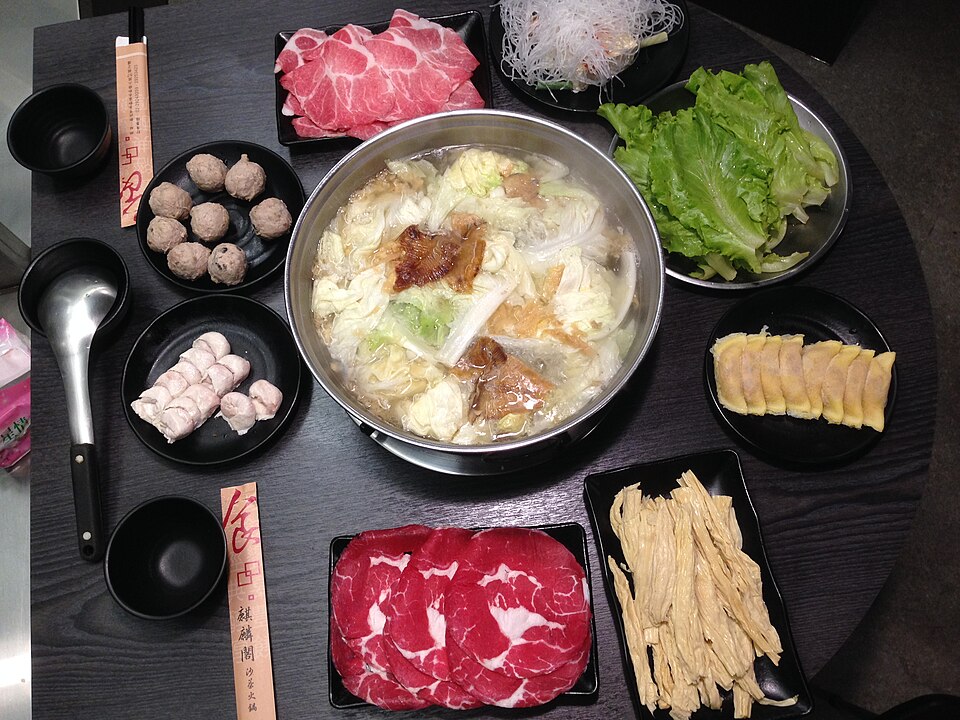
What it is
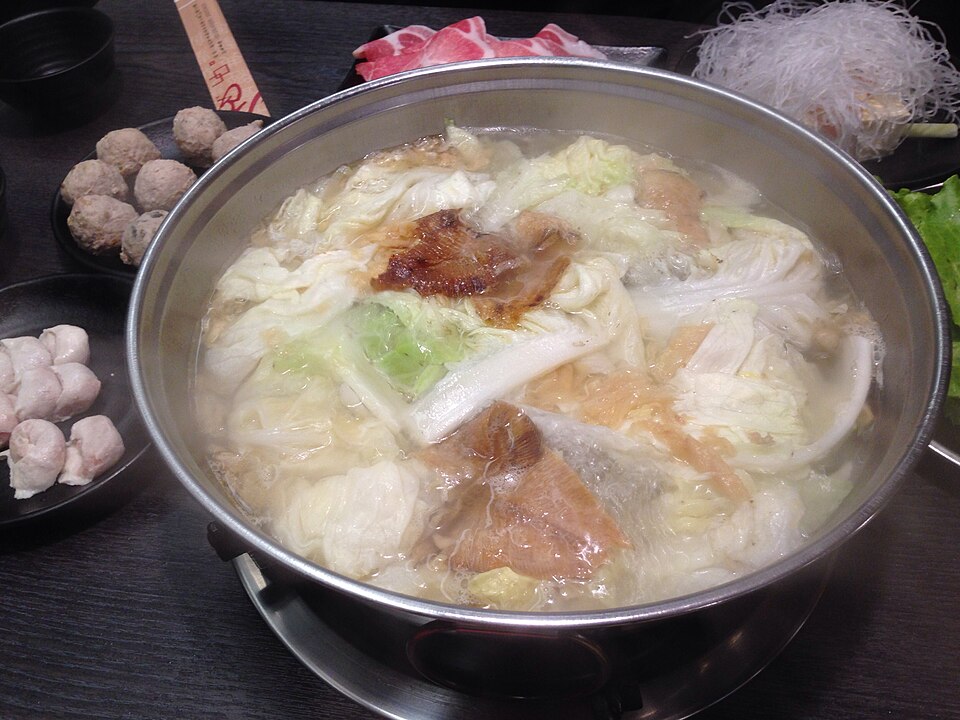
Shacha hot pot (沙茶火鍋) is a light broth in which diners cook thin slices of beef, pork, vegetables and fish-paste products, then dip them in shacha (沙茶). Shacha is an oily paste of dried flatfish, dried shrimp, garlic, shallot and chilli. Its Hokkien and Teochew reading, sa-te, comes from satay. Kaohsiung calls the meal Shantou hot pot (汕頭火鍋), and older Tainan shops use the name shacha stove (沙茶爐).
Where it came from
Shacha grew out of satay sauce, carried back to southern China by Min Nan migrants returning from Southeast Asia. The Teochew version, from the Chaoshan region of Guangdong, was reworked with dried seafood.
Teochew ties with Tainan go back a long way. The city had a Teochew guildhall under the Qing, and after treaty ports opened in the 1860s, boats ran regularly between Tainan and Shantou. A food writer credits that link with bringing shacha stoves and shacha sauce to local streets, along with almond tea and fish noodles.
The hot pot spread after the Second World War, when migrants from Shantou and Chaozhou settled in Kaohsiung. The first shops clustered in Yancheng near the Wanlong theatre. In 1958 Liu Lai-chin, a Tainan noodle shop owner from Chaoshan, started the Bull Head (牛頭牌) shacha brand. The historian Tseng Lin-yi (曾齡儀) argues that these migrants, by introducing shacha to postwar Tainan, helped Taiwanese take to eating beef.
Taipei caught on too. A 1973 newspaper column said shacha hot pot restaurants could be seen almost everywhere downtown, and sent readers to the Chongqing roundabout and the lanes by the Ximen Red House.
How it is made
The broth stays light. Tainan shops simmer dried flatfish (扁魚) and dried squid with cabbage and celery. In Kaohsiung, Shantou Tien Tien boils fried flatfish with black-pork bones. Each shop mixes and fries its own shacha, so recipes differ. Tien Tien's blend uses dried shrimp from Donggang, flatfish from Penghu and Donggang, Beigang shallots, sesame, peanut powder and Chinese herbs. Tien Tien uses local beef slaughtered daily.
How to eat it
Swish a slice of beef in the broth for six or seven seconds, then dip it in shacha. Some regulars stir a raw egg yolk into the sauce. Another way is to put raw slices in a bowl and pour hot broth over them. Tainan diners cook vegetables, tofu and fish-paste items first and leave meat and liver until last, so the broth stays clear.
Around Taiwan
- Tainan
- Tainan shops fry their own shacha, keep the broth clear and add local fish-paste products such as fish slab (魚冊), which one food writer says he has eaten only in Tainan. Well-known names include Xiao Haozhou (小豪洲) and Guangdong Shacha Stove (廣東沙茶爐).
- Kaohsiung
- Shantou Tien Tien (汕頭天天沙茶火鍋) in Yancheng was founded in 1947 by a couple from Chaozhou and Tainan. Mirror Media calls it the city's second-oldest Shantou hot pot. It began with stir-fried shacha beef and beef brisket soup, and the founders' daughter now runs it.
- North
- In postwar Taipei, shacha hot pot clustered around Ximen. Tseng Lin-yi points to three hot pot shops run by the Wu family: Ching Hsiang (清香), Yuan Hsiang (元香) and Lao Hsimen (老西門).