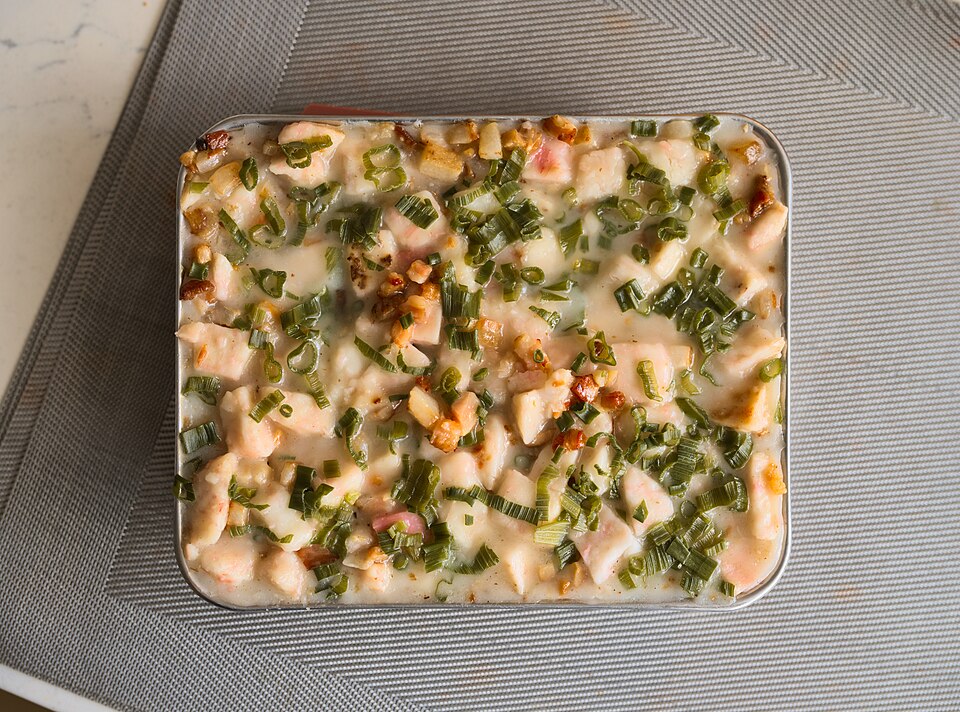
What it is
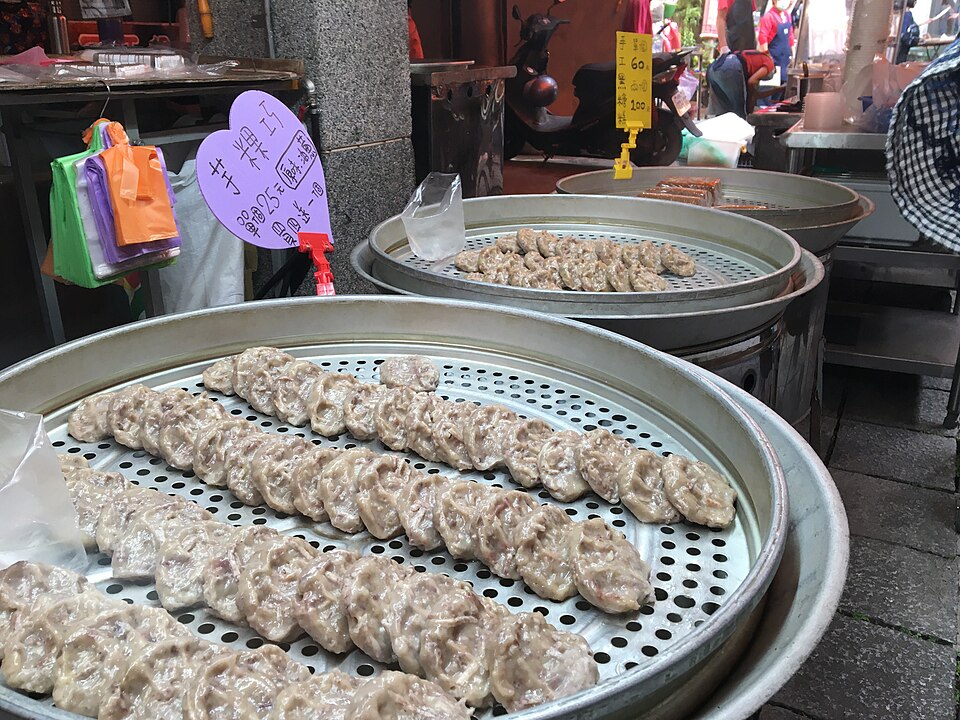
Steamed taro cake (芋粿, ōo-kué in Taiwanese Hokkien) is shredded taro bound with glutinous rice dough and steamed into a firm, savoury cake. Shallots flavour it, and many home versions add minced meat, dried shrimp or shiitake. In Hokkien it is also called 芋粿巧, after the curved shape it is often pressed into. The same snack is made in Chaoshan, Fuzhou and southern Fujian. It differs from the Cantonese taro cake served at dim sum.
Where it came from
The cake belongs to the seventh lunar month, when the Ghost Festival (中元普渡) is held and households set out food for wandering spirits. That month is also the peak season for taro.
The crescent version carries extra meaning. In Taiwanese, 巧 means "curved", and the shape is said to recall the moon blocks (筊杯) thrown at temples to put a question to the gods. A popular play on words also links taro, ōo, with 護 (to protect), so the offering doubles as a wish for the safety of one's grandchildren.
Like most steamed rice cakes (粿), it is chiefly a ritual food. These cakes are in decline, as fewer young people learn to make them and ancestral offerings matter less to them than they did.
How it is made
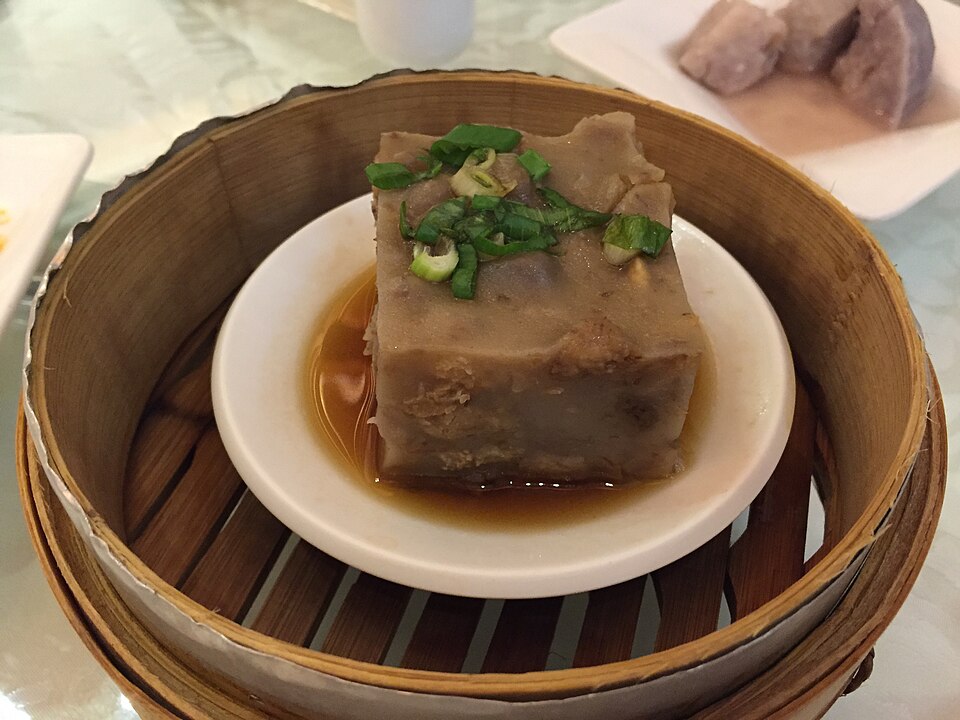
The older method starts with glutinous rice ground into a milk, which is pressed to drain off the water. Peeled, shredded taro is mixed in with fried shallots. The mixture is divided into palm-sized pieces or crescents, set on banana or bamboo leaves and steamed in a basket. Home recipes often use glutinous rice flour, sometimes with some ordinary rice flour, and add stir-fried minced meat, dried shrimp and mushroom. Cantonese taro cake is instead steamed in a deep pan and sliced.
How to eat it
It goes on Ghost Festival offering tables in the seventh lunar month, and traditional rice cake shops in both northern and southern Taiwan sell it as a snack. Cantonese-style taro cake is cut into slices, pan-fried and topped with chopped spring onion.
Around Taiwan
- Kaohsiung
- Erge Shih Tang (貳哥食堂) in Gushan steams its 寶島千絲芋香糕 to order in a small basket. Shredded taro and sweet potato are stacked into a cake and topped with stir-fried shiitake, dried shrimp and shallots. Diners can have it instead of rice beside the braised saury.