What it is
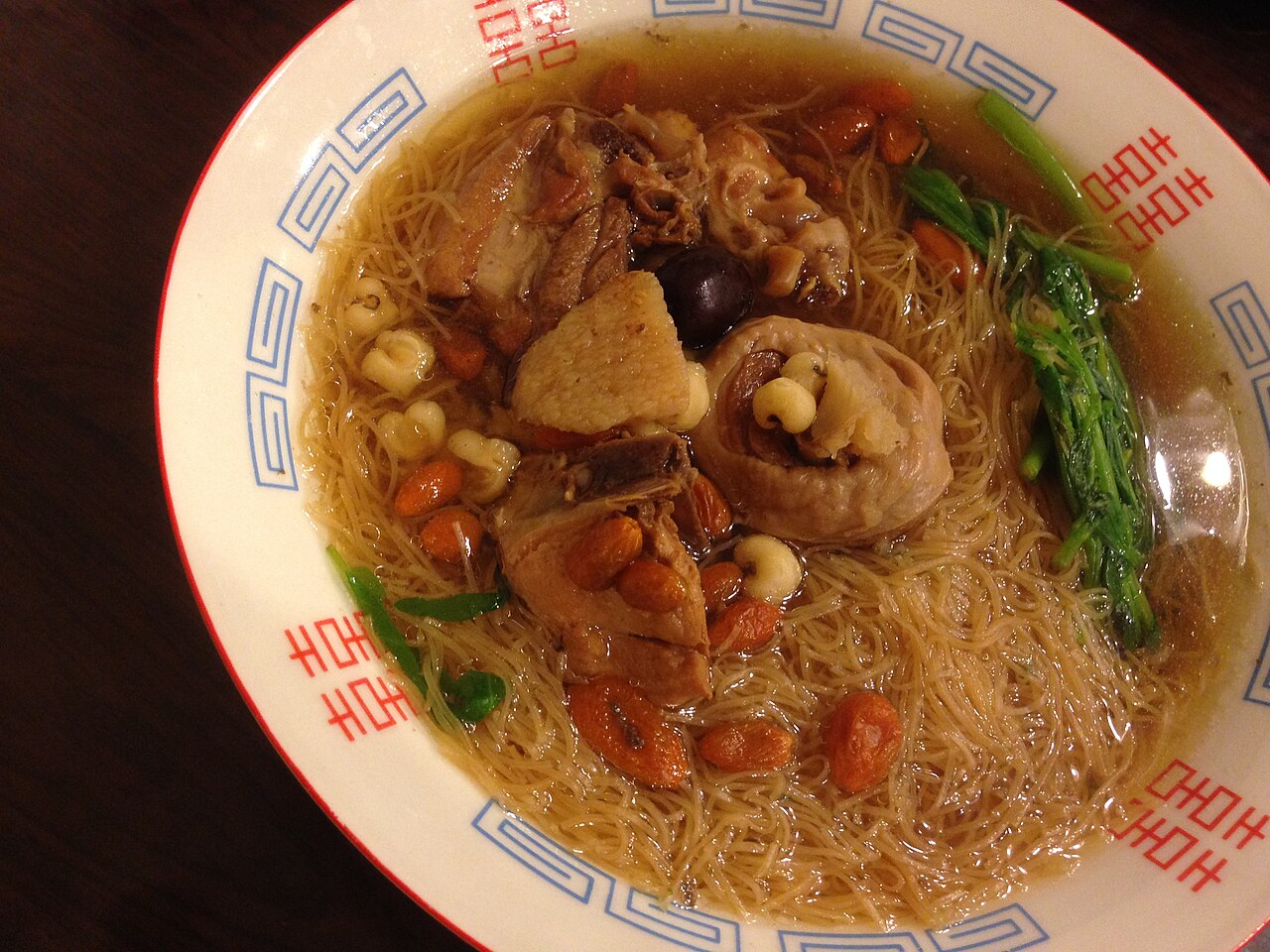
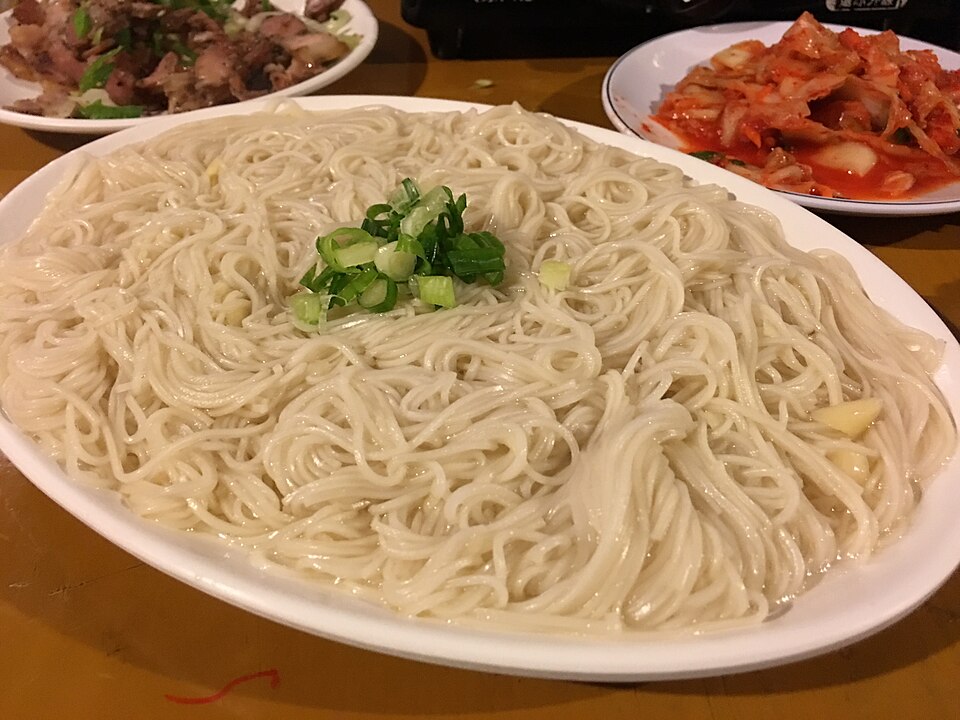
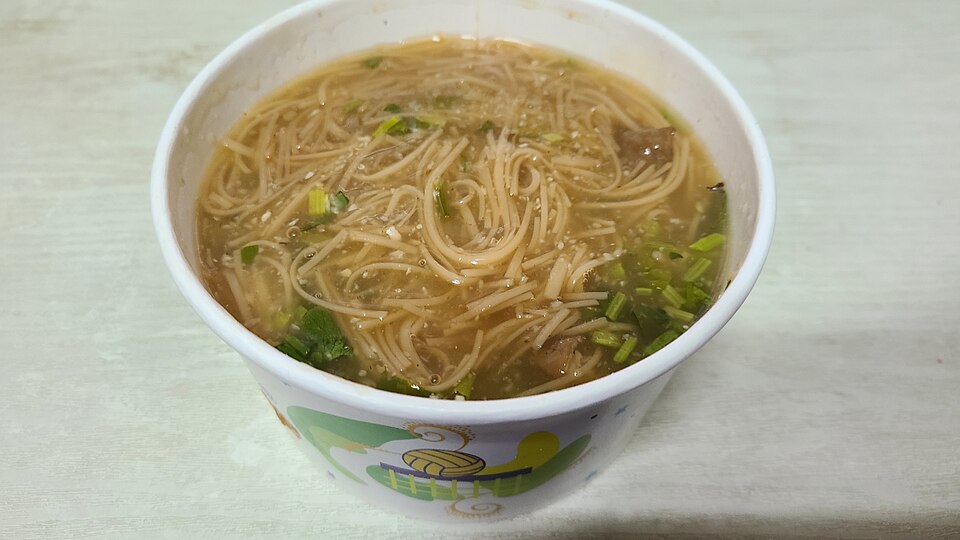
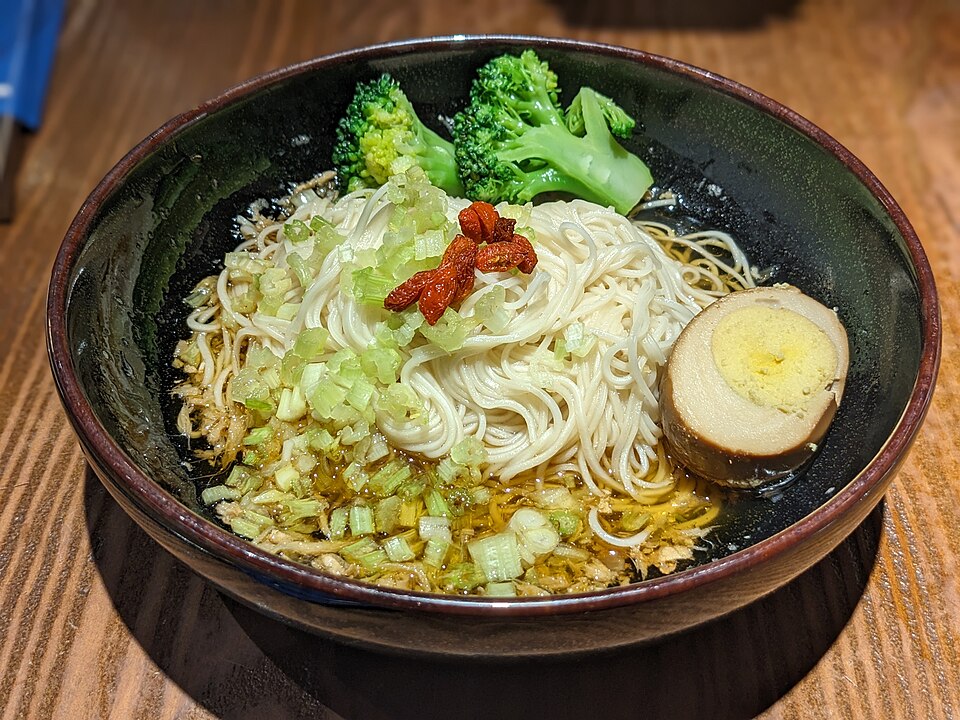
Misua (麵線, mī-sòaⁿ in Taiwanese) are wheat noodles almost as thin as thread, made from flour, water and a generous amount of salt. For this dish the plain white kind is boiled and dressed with black sesame oil (黑麻油), which is pressed from black sesame seeds, usually with slices of ginger. It is eaten on its own or beside a herbal soup.
Where it came from
Misua came to Taiwan with migrants from Fujian in the 17th century. The long strands stand for long life, so the noodles appear at birthdays and festivals, and many families avoid cutting or biting through them.
The sesame oil belongs to a different custom: zuo yuezi (坐月子), the month of rest and special food that follows childbirth. Taiwanese confinement menus lean on black sesame oil and old ginger, both treated as warming in traditional Chinese medicine. Sesame oil chicken (麻油雞) is the best-known confinement dish, and sesame oil misua uses the same oil and ginger with noodles in place of chicken. Sesame oil is traditionally believed to help the womb contract after birth. Outside confinement, sesame oil dishes are cold-weather food, cooked in many homes through autumn and winter.
How it is made
Misua dough carries more salt than ordinary noodle dough, around 3 per cent, which makes it stretchy enough to pull very fine. Traditional makers loop the dough over poles, pull it by hand and dry it in the sun, though most is now machine-made. Cooks often rinse the noodles to wash off surface salt, then boil them very briefly, as they break up if overcooked. Thin slices of ginger are fried gently in black sesame oil and the drained noodles are tossed through it.
How to eat it
It turns up on confinement menus alongside other sesame oil dishes, and as a warming meal in cold weather. Because sesame oil and ginger are thought to heat the body, people with a cold, fever or sore throat are usually told to skip it. Herbal soup shops serve it as the noodle part of a set meal.
Around Taiwan
- Tainan
- Po Jen Tang (博仁堂), a century-old Chinese herbal shop in Tainan that now serves tonic soups, includes sesame oil misua in its set meals, made with sesame oil from Anding District. Sesame grown on the Chiayi and Tainan plains is rated highly for pressing oil.
- Central
- In Fuxing (福興), Changhua, the Lin family still makes misua largely by hand, hanging long curtains of noodles in the courtyard to dry. The Christian Science Monitor describes them as one of the last families in Taiwan working this way.