What it is
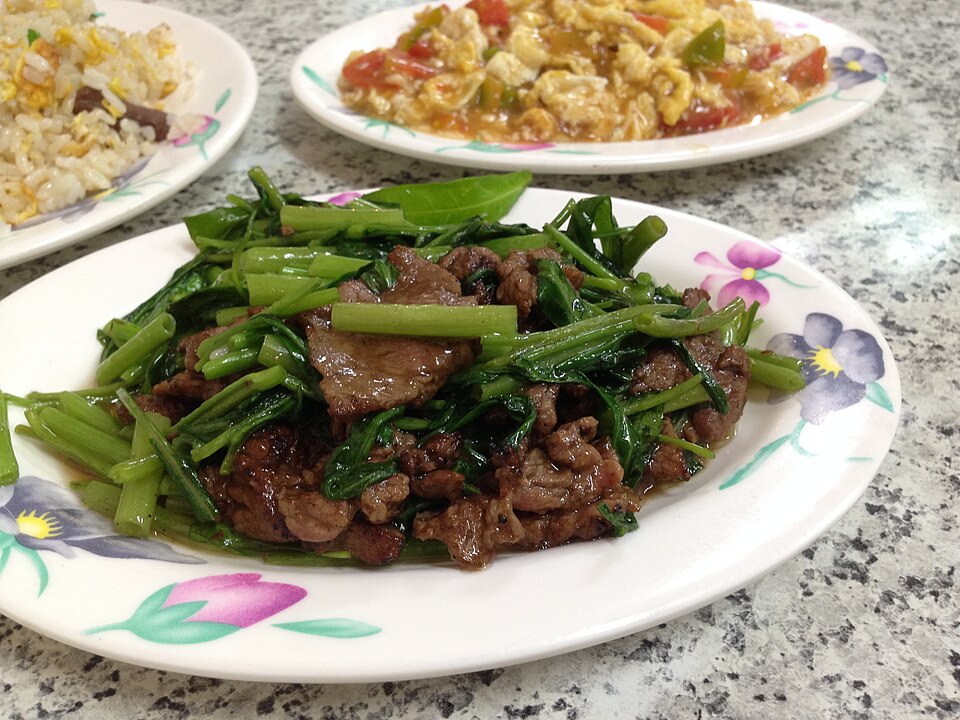
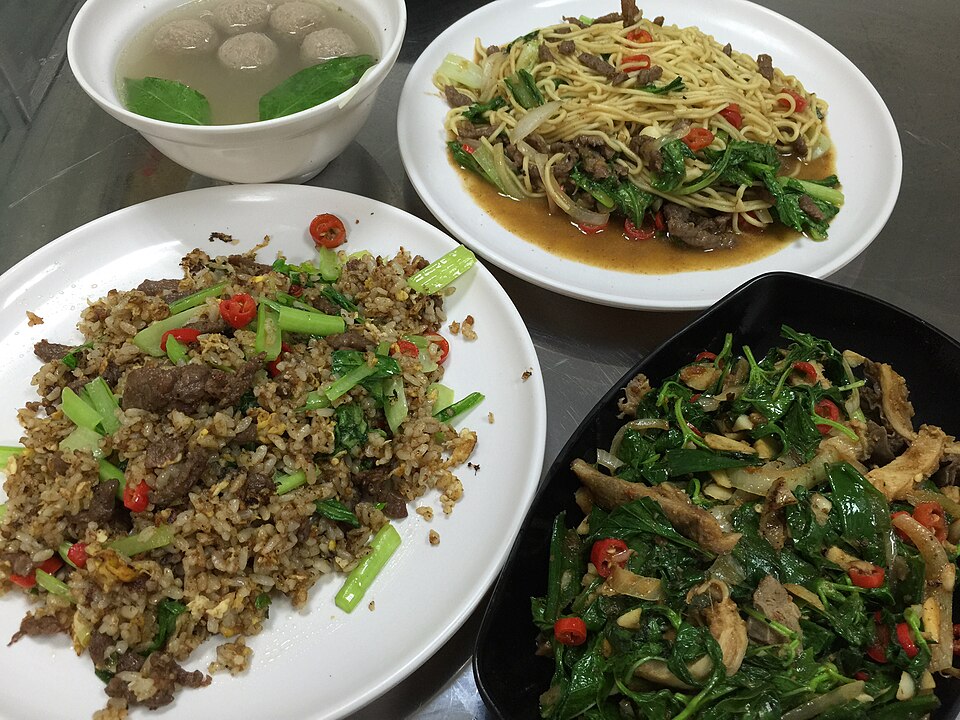
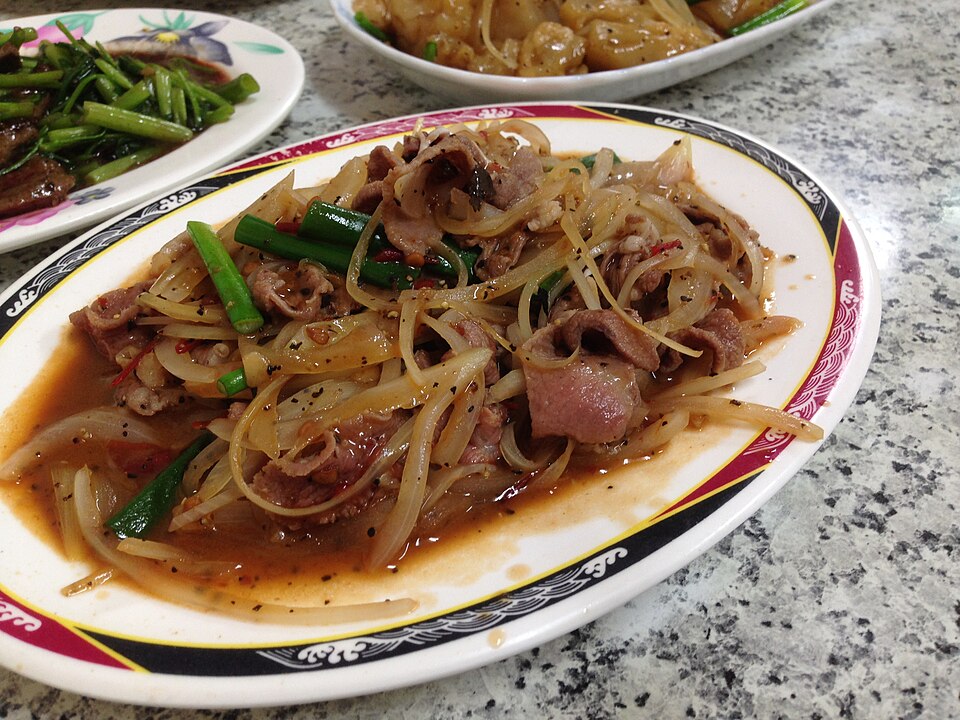
Stir-fried beef (炒牛肉) covers the quick stir-fries that beef soup shops cook to order with the same fresh beef as their soup. Cabbage and Chinese kale are common partners, and many cooks season with shacha (沙茶), a savoury paste of dried fish, dried shrimp, garlic, shallots and chilli. Shops also stir-fry beef tongue, heart or tendon.
Where it came from
Beef eating slowly won acceptance in Taiwan during the 1960s and 1970s, and shacha grew more popular alongside it. The paste came with Chaoshan (潮汕) migrants who settled in Taiwan after the Chinese Civil War. Its name echoes satay, which Min Nan people brought home from Southeast Asia, but the Chaoshan version is built on dried seafood rather than peanuts. In Tainan, Liu Lai-chin, a noodle shop owner from Chaoshan, launched the Bull Head (牛頭牌) brand in 1958. Tseng Lin-yi of Taipei Medical University argues that Chaoshan migrants in Tainan helped more Taiwanese take up beef, and that shacha is now indispensable in beef stir-fries and hotpot.
How it is made
The beef is sliced thin, usually from the same fresh, unfrozen local meat that goes into the soup, and each plate is cooked to order. It goes into a very hot wok with the vegetable and seasonings and comes out after moments, so it stays tender. Beef tongue gets the same fast, fierce treatment. A softer version folds the beef into loosely set egg (滑蛋牛肉).
How to eat it
Order a plate to share with bowls of beef soup and rice, often braised pork rice (肉燥飯). Some shops sell stir-fries in sizes for one, two or four people, so order by the size of the group.
Around Taiwan
- Tainan
- Tainan's beef soup shops use fresh, unfrozen local beef, and each has its own stir-fry. A Cun (阿村) recommends beef with cabbage. Shun Te (順德) in Xuejia is known for beef with soft egg and tendon with cabbage, and Wen Zhang (文章) for beef tongue.