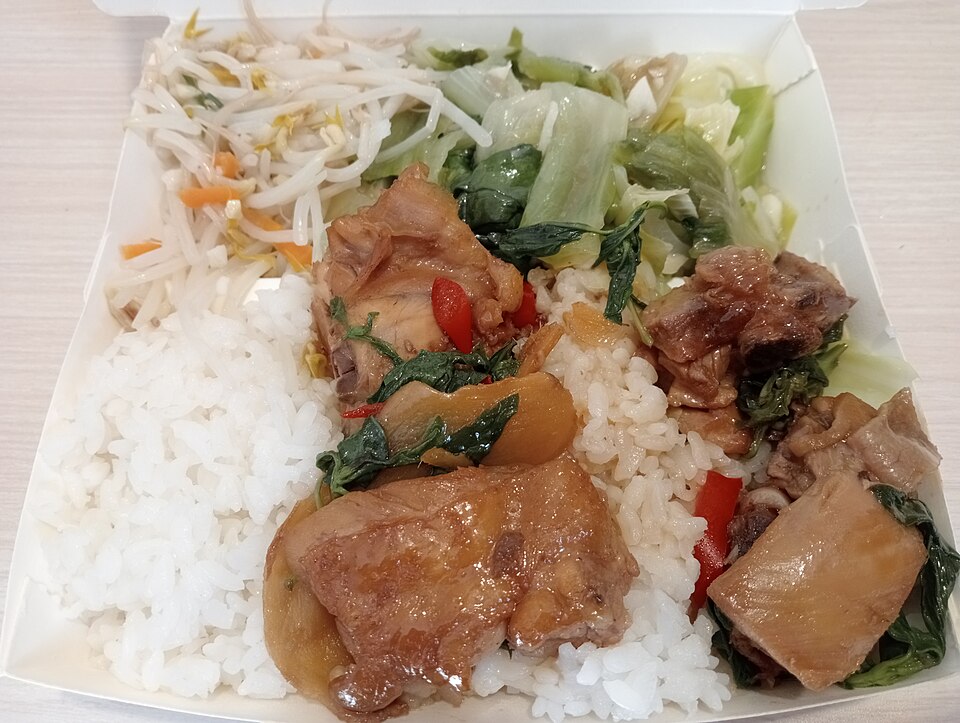
What it is
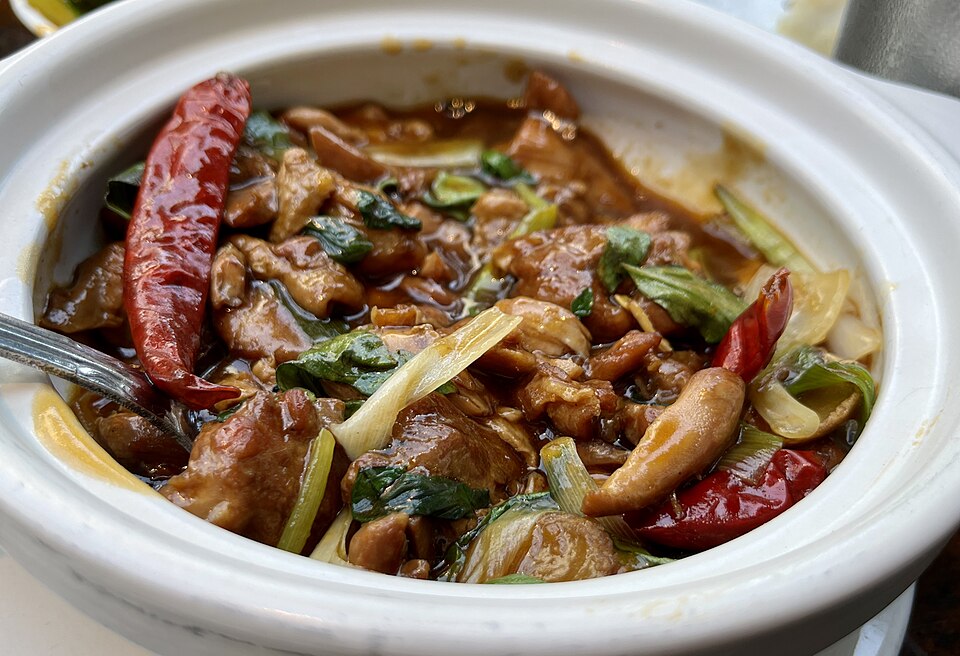
Three-cup chicken (三杯雞, sanbeiji) is chicken cooked with sesame oil, rice wine and soy sauce, plus plenty of ginger and garlic, until almost no liquid is left. Taiwanese cooks usually add Thai basil (九層塔) near the end. The sauce turns glossy and clings to the meat, savoury with a little sweetness. The Taiwanese version is simpler in flavour and not spicy.
Where it came from
The name refers to a cup each of sesame oil, rice wine and soy sauce. Where the dish began is disputed. A popular story places it in Jiangxi province, where a sympathetic jailer is said to have cooked it for the Song-dynasty loyalist Wen Tianxiang before his execution. It is also described as a speciality of Ningdu, a Hakka county in Jiangxi, and some accounts credit Hakka migrants with bringing it to Taiwan.
The historian Kuo Chung-hao (郭忠豪) of Taipei Medical University traced the earliest known recipe to 1956, with newspapers linking it to Jiangxi only later. Jiangxi gazetteers and cookbooks from the Ming to the Republican era show similar methods but no dish of that name. Senior Taiwanese chefs he spoke to tie it to thrift and to the rice-wine dishes cooked for new mothers. Other accounts say cooks used the method on a chicken that seemed to be falling ill, or call it a variation on sesame oil chicken (麻油雞).
From the 1970s, free-range chicken restaurants (土雞城) spread it across the island. The method has since moved to other ingredients, and three-cup king oyster mushroom (三杯杏鮑菇) is now a classic in its own right.
How it is made
Slices of ginger are fried in sesame oil until fragrant. Chicken pieces go in, then rice wine and soy sauce, and some cooks add rock sugar or maltose. In the traditional clay pot, the heat starts high and then drops low so the meat soaks up the sauce. The basil goes in last, and the pot comes to the table still sizzling. Modern recipes use far less than a full cup of oil.
How to eat it
It is a shared dish at family restaurants and free-range chicken restaurants, eaten with plain rice or congee. Versions vary: Shin Yeh (欣葉) uses boneless thigh, and Chi Chia Chuang (雞家莊) cooks pork blood cake (米血) in the same pot and leaves out the basil.
Around Taiwan
- Kaohsiung
- Mai Yen Shun (賣塩順), a retro home-style restaurant near the Kaohsiung Museum of Fine Arts, is known for chicken leg fried with old ginger in three-cup style, rich with sesame oil, soy and basil.